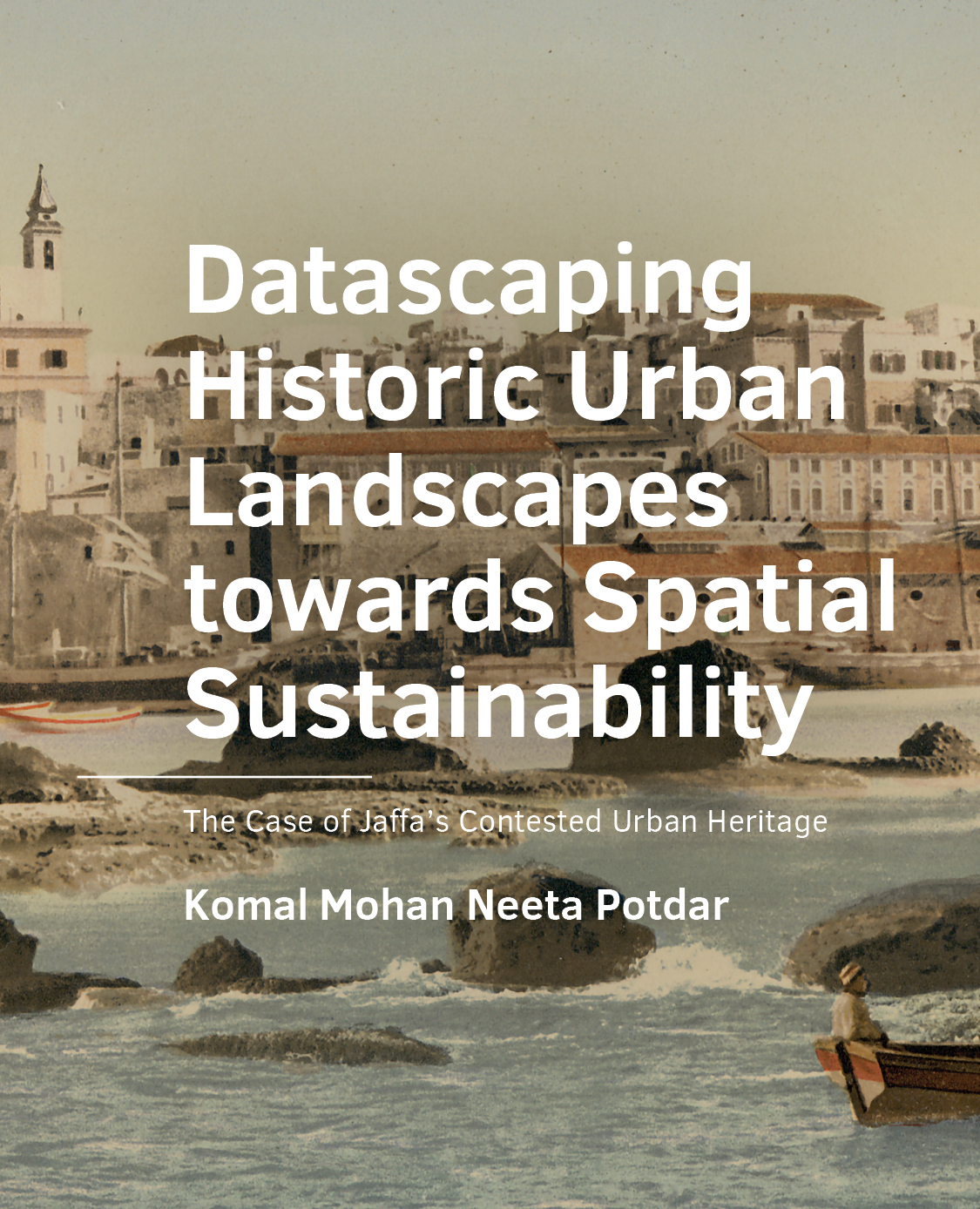
The Case of Jaffa’s Contested Urban Heritage
Downloads
Published
Issue
Section

How to Cite
Keywords:
Historic Urban Landscapes, Spatial Sustainability, Contested Urban Heritage, Datascaping, General Systems Theory, Jaffa, IsraelAbstract
Historic cities increasingly face shared challenges where development pressures intersect with heritage conservation and sustainable urban development, issues that conventional planning approaches struggle to address alone. While international frameworks such as the Historic Urban Landscape Recommendation (HUL) and the New Urban Agenda (NUA) acknowledge these tensions, their conceptualisation often remains normative, limiting contextual applicability. Accordingly, this study positions itself as critical-reformist, aiming to interrogate HUL's normative ambitions and the broader sustainability agenda, and to reveal the contextual and institutional conditions under which they can be meaningfully operationalised in contested urban environments. Grounded in General Systems Theory, which frames cities as interconnected, evolving systems, the research is complemented by Critical Heritage Studies, which reads heritage as a politically produced, dynamic process. Together these frameworks inform a mixed-method, critical case study, it explores datascaping: an epistemic approach and an interpretive, relational, and performative method for visualising and integrating heterogeneous spatial, cultural, and socio-economic knowledge. Jaffa, a historic and mixed district within Tel Aviv-Yafo, serves as the critical case study, illustrating how ethno-national and socio-economic contestation shape heritage-led gentrification, spatial segregation, and the displacement of long-standing Arab communities. The datascaping exercises reveal socio-spatial patterns typically overlooked in conventional planning, showing how conservation, tourism, and redevelopment intensify spatial homogeneity, segregation and socio-economic pressures. By surfacing knowledge often excluded from formal planning processes, the method offers critical evidence to inform more inclusive, reflective planning practices. The study concludes that datascaping repositions heritage knowledge within the negotiation of urban futures, and that understanding Jaffa's dynamics through this lens offers analytical transferability to other historic cities confronting similar tensions between heritage, equity, and sustainable development.


