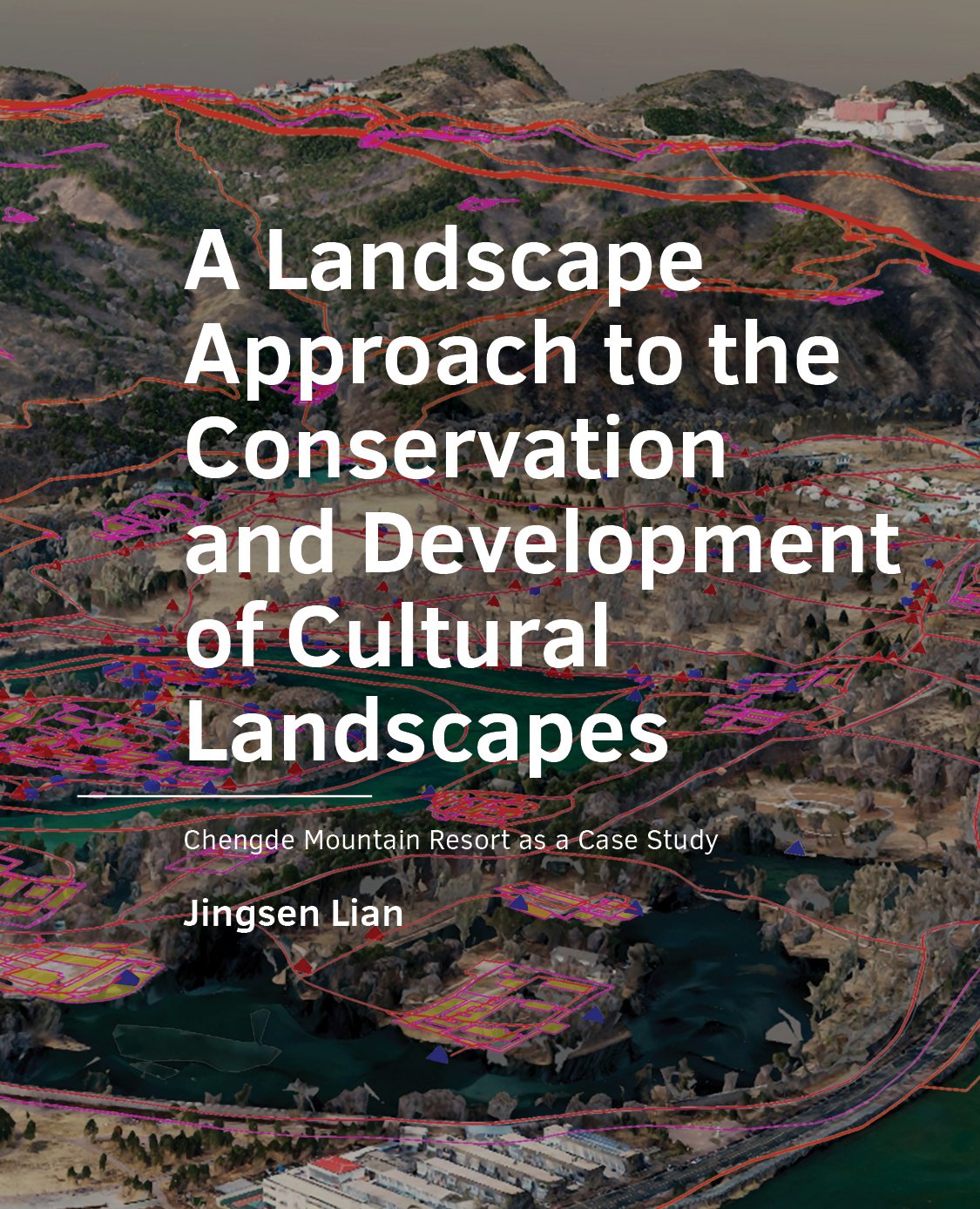
Chengde Mountain Resort as a Case Study
Downloads
Published
Issue
Section

How to Cite
Keywords:
Cultural landscape, landscape approach, heritage conservation and development, landscape & architecture, environmental assessment, landscape ecology, geographical hazards, AI-driven planning, public & perception, landscape governanceAbstract
This thesis argues that cultural landscapes can be conserved and developed through an integrated landscape approach that treats them as living systems. Heritage value emerges not only from monuments or scenic elements, but from the interaction of physical structures, ecological processes, historical layers, and social experience. In response to climate change and urban transformation, conservation must move beyond static object protection toward system evolution, long-term resilience and adaptive capacity.
The proposed landscape approach connects three components: landscape mapping, landscape planning, and landscape design. Landscape mapping characterizes long-term evolution, persistent spatial structures, and scene-level attributes through literature synthesis, digital reconstruction, clustering, and land-use analysis, using Chengde Mountain Resort as the case.
Landscape planning integrates hazards, ecological sensitivity, expert knowledge, public perception, spatial relationships, and visitor movement. The Hazard–Ecology–Perception Landscape Planning (HEPLP) framework supports targeted zoning and governance, while the Perceptual–Spatial Landscape Planning Model (PSLPM) uses large language models, graph neural networks, and route optimization to reduce visitor pressure, improve perceptual coherence, and expand access to meaningful but overlooked scenes. Landscape design translates diagnosis and planning into operational actions. Design-based and cluster-specific toolkits support reversible construction, compatible material selection, stronger ecological connections, improved water retention, and more effective visitor allocation. The overall contribution is a coherent framework that connects historical understanding and resilience with implementable strategies for conservation and development.
References
Abdel-Rahman, N. H. (2016). Egyptian historical parks, authenticity vs. change in Cairo’s cultural landscapes. Procedia - Social and Behavioral Sciences, 225, 391–409. https://doi.org/10.1016/j.sbspro.2016.06.086
Abdulkareem, K. R., & Sonmez, E. (2024). Architectural Harmony with Nature. KHWARIZMIA, 2024, 4-7. doi: 10.70470/KHWARIZMIA/2024/002.
Aboukhater, R., Mouhanna, Z., & Atfeh, N. (2023). Urban cultural heritage vulnerability as a risk driver for sustainability and resilience, Case study of the city centre of Damascus, Syria. AIP Conference Proceedings, 2793, 060012. https://doi.org/10.1063/5.0163122
Accati, E., & Gullino, P., (2009). Plants in Gardens and Parks of XVIII Century in Piedmont. Paper presented at the 2nd International Conference on Landscape and Urban Horticulture, Bologna, Italy. https://doi.org/10.17660/ActaHortic.2010.881.157
Adie, B. A., & Amore, A. (2019). Transnational World Heritage, (meta)governance and implications for tourism: An Italian case. Annals of Tourism Research, 80, 102844. https://doi.org/10.1016/j.annals.2019.102844
AECID. (2019). La Chiquitanía en nosotros: Un compromiso de la Cooperación Española con el territorio, su patrimonio y su cultura para el desarrollo [Memoria institucional / Proyecto Plan Misiones]. Agencia Española de Cooperación Internacional para el Desarrollo. https://aecid.bo/portal/wp-content/uploads/2024/09/LA-CHIQUITANIA-EN-NOSOTROS-formato-digital.pdf
Agapiou, A., Lysandrou, V., Themistocleous, K., & Hadjimitsis, D. G. (2016). Risk assessment of cultural heritage sites clusters using satellite imagery and GIS: The case study of Paphos District, Cyprus. Natural Hazards, 83(1), 5–20. https://doi.org/10.1007/s11069-016-2211-6
Ai, Z., Chiu, D. K. W., & Ho, K. K. W. (2024). Social Media Analytics of User Evaluation for Innovative Digital Cultural and Creative Products: Experiences regarding Dunhuang Cultural Heritage. Journal on Computing and Cultural Heritage, 17(3), 1–25. https://doi.org/10.1145/3653307
Aimar, F. (2024). The Resilience of Cultural Landscapes. Springer. https://link.springer.com/book/10.1007/978-3-031-55861-0
Aimar, F., Gullino, P., & Devecchi, M. (2021). Towards reconstructing rural landscapes: A case study of Italian Mongardino. Journal of Rural Studies, 88, 446–461. https://doi.org/10.1016/j.jrurstud.2021.06.021
Aklan, M., de Fraiture, C., & Hayde, L. G. (2025). Why we should revitalize indigenous water harvesting systems: lessons learned. International Soil and Water Conservation Research, 13(1), 152–163.
Aksoy, A., & Corakbas, F. K., (2021). Politics of Loss in a World Heritage Site: The Case of the Historic Vegetable Gardens of the Land Walls of Istanbul. Heritage and Society, 14(1), 112-138. https://doi.org/10.1080/2159032x.2021.2022917
Altınçekiç, H. S., Erdoğan, R., Dirik, H. G., & Oktay, H. E. (2016). Sustainable management and protection of historical landscape: The case of Bakırköy Mental and Psychiatric Diseases Hospital Garden, Istanbul–Turkey. In R. Efe, İ. Cürebal, A. Gad, & B. Tóth (Eds.), Environmental sustainability and landscape management (pp. 81–99). St. Kliment Ohridski University Press.
Andrianou, A.-A., & Papaioannou, G. (2019). Cultural landscapes and botanic gardens: The case of Mon-Repos Garden in Corfu Island, Greece. In U. Stankov, S.-N. Boemi, S. Attia, S. Kostopoulou, & N. Mohareb (Eds.), Cultural sustainable tourism: A selection of research papers from IEREK Conference on Cultural Sustainable Tourism (CST), Greece 2017 (pp. 99–108). Springer. https://doi.org/10.1007/978-3-030-10804-5_10
Antrop, M. (2005). Why landscapes of the past are important for the future. Landscape and Urban Planning, 70(1–2), 21–34. https://doi.org/10.1016/j.landurbplan.2003.10.002
Antrop, M. (2006). Sustainable landscapes: contradiction, fiction, or utopia? Landscape and Urban Planning, 75(3–4), 187–197. https://doi.org/10.1016/j.landurbplan.2005.02.014
Antrop, M., (1998). Landscape change: Plan or chaos? , Landscape and urban planning 41(3-4), 155-161. https://doi.org/10.1016/S0169-2046(98)00068-1
Antrop, M., (2018). A brief history of landscape research. In The Routledge Companion to Landscape Studies (pp. 1-15): Routledge.
Arikan, I., Koparan, I., Arikan, A. M., & Shenkar, O. (2019). Dynamic capabilities and internationalization of authentic firms: Role of heritage assets, administrative heritage, and signature processes. Journal of International Business Studies, 53(4), 601–635. https://doi.org/10.1057/s41267-019-00261-5
Arts, B., Buizer, M., Horlings, L., Ingram, V., Van Oosten, C., & Opdam, P. (2017). Landscape approaches: a state-of-the-art review. Annual Review of Environment and Resources, 42(1), 439-463. https://doi.org/10.1146/annurev-environ-102016-060932
Ash, R. B. (1966). Information Theory. https://openlibrary.org/books/OL5951380M/Information_theory
Aşur, F., & Alp, Ş., (2020). Landscape Analysis and Regain Functionality OF Gulistan Garden in The Historic Van Castle. International Journal of Ecosystems and Ecology Science-IJEES, 10(1). https://doi.org/10.31407`/ijees10.108
Athanasiadou, E. J. H., (2019). Historic Gardens and Parks Worldwide and in Greece: Principles of Acknowledgement, Conservation, Restoration and Management. Heritage 2(4), 2678-2690. https://doi.org/10.3390/heritage2040165
Backhaus, G., & Murungi, J., (2009). Symbolic Landscapes: Springer.
Badami, A. A., (2021). Managing the Historical Agricultural Landscape in the Sicilian Anthropocene Context. The Landscape of the Valley of the Temples as a Time Capsule. Sustainability, 13(8), 4480. https://doi.org/10.3390/su13084480
Bai, N., Nourian, P., Luo, R., Cheng, T., & Roders, A. P. (2023). Screening the stones of Venice: Mapping social perceptions of cultural significance through graph-based semi-supervised classification. ISPRS Journal of Photogrammetry and Remote Sensing, 203, 135–164. https://doi.org/10.1016/j.isprsjprs.2023.07.018
Balcan, C., Aydın, E. Ö., & Ünsal, Ö. (2024). Value-based optimization model for cultural route design: Ancient Water Supply Heritage of Istanbul (Türkiye). Journal of Cultural Heritage, 70, 97–110. https://doi.org/10.1016/j.culher.2024.08.016
Bálint, K., & Nagy, I. R. B. (2022). Sustainable grassland management in historic gardens. 4D, 44–53. https://doi.org/10.36249/62.4
Barau, A. S., Abubakar, I. R., & Gambo, A. (2025). Patterns and sustainability implications of emergent vertical urbanism in a traditional African city. Sustainable Futures, 10, 101439.
Baster, P., (2022). Comparative analysis of the nineteenth century Austrian Empire maps applied to the protection and restoration of designed landscapes. Studies in the History of Gardens & Designed Landscapes, 42(3), 210-225. https://doi.org/10.1080/14601176.2022.2125223
Bell, S., (2012). Landscape: pattern, perception and process. New York: Routledge.
Benfield, R., (2013). Garden Tourism: CABI.
Bhagatkar, P. M., & Lamba, A. (2024). Empirical review of innovative soil improvement techniques in geotechnical engineering. Mesopotamian Journal of Civil Engineering., 2024, 42–53. https://doi.org/10.58496/mjce/2024/007
Blasi, C., Capotorti, G., Copiz, R., Guida, D., Mollo, B., Smiraglia, D., & Zavattero, L. (2014). Classification and mapping of the ecoregions of Italy. Plant Biosystems—An International Journal Dealing with All Aspects of Plant Biology, 148(6), 1255–1345. https://doi.org/10.1080/11263504.2014.985756
Bloemers, T., Kars, H., Van der Valk, A., & Wijnen, M. (Eds.). (2010). The cultural landscape and heritage paradox: Protection and development of the Dutch archaeological-historical landscape and its European dimension. Amsterdam University Press. https://doi.org/10.1017/9789048510962
Bobek, W., & Łakomy, K. (2019). Contemporary processes and the selection of materials in historical urban greenery areas on example from Cracow and Warsaw. IOP Conference Series: Materials Science and Engineering, 471, Article 092018. https://doi.org/10.1088/1757-899X/471/9/092018
Bohnet, I. C., Molnarova, K. J., Van Den Brink, A., Beilin, R., & Sklenicka, P. (2022). How cultural heritage can support sustainable landscape development: The case of Třeboň Basin, Czech Republic. Landscape and Urban Planning, 226, 104492. https://doi.org/10.1016/j.landurbplan.2022.104492
Bornioli, A., Birenboim, A., Druez, E., Livny, O., Van Der Noll, J., Mayer, N., & Bloom, P. B. (2023). Environmental appraisals in outgroup cultural landscapes: The role of Muslim elements in urban settings. Cities, 143, 104579. https://doi.org/10.1016/j.cities.2023.104579
Bosher, L., Kim, D., Okubo, T., Chmutina, K., & Jigyasu, R. (2020). Dealing with multiple hazards and threats on cultural heritage sites: an assessment of 80 case studies. Disaster Prevention and Management an International Journal, 29(1), 109-128. https://doi.org/10.1108/dpm-08-2018-0245
Branton, N. (2009). Landscape Approaches in Historical Archaeology: The Archaeology of Places. In Springer eBooks (pp. 51–65). https://doi.org/10.1007/978-0-387-72071-5_4
Bridges, T. S., Smith, J. M., King, J. K., Simm, J. D., Dillard, M., deVries, J., Reed, D., Piercy, C. D., van Zanten, B., & Arkema, K. (2022). Coastal natural and nature-based features: International guidelines for flood risk management. Frontiers in Built Environment, 8, 904483.
Bunruamkaew, K., & Murayam, Y. (2011). Site Suitability Evaluation for Ecotourism Using GIS & AHP: A Case Study of Surat Thani Province, Thailand. Procedia - Social and Behavioral Sciences, 21, 269–278. https://doi.org/10.1016/j.sbspro.2011.07.024
Buragohain, D., Meng, Y., Deng, C., Li, Q., & Chaudhary, S. (2024). Digitalizing cultural heritage through metaverse applications: challenges, opportunities, and strategies. Heritage Science, 12(1). https://doi.org/10.1186/s40494-024-01403-1
Burger, J., (2000). Landscapes, tourism, and conservation. Science of the Total Environment, 249(1-3), 39-49. https://doi.org/10.1016/S0048-9697(99)00509-4
Busker, T., de Moel, H., Haer, T., Schmeits, M., van den Hurk, B., Myers, K., Cirkel, D. G., & Aerts, J. (2022). Blue-green roofs with forecast-based operation to reduce the impact of weather extremes. Journal of Environmental Management, 301, 113750.
Butler, A., & Berglund, U., (2014). Landscape character assessment as an approach to understanding public interests within the European landscape convention. Landscape Research, 39(3), 219-236. https://doi.org/10.1080/01426397.2012.716404
Cai, Z., Fang, C., Zhang, Q., & Chen, F. (2021). Joint development of cultural heritage protection and tourism: The case of Mount Lushan cultural landscape heritage site. Heritage Science, 9(1).
Calinski, T., & Harabasz, J. (1974). A dendrite method for cluster analysis. Communications in Statistics, 3(1), 1–27. https://doi.org/10.1080/03610927408827101
Cameron, R. W. F., Blanuša, T., Taylor, J. E., Salisbury, A., Halstead, A. J., Henricot, B., & Thompson, K. (2012). The domestic garden—Its contribution to urban green infrastructure. Urban Forestry & Urban Greening, 11(2), 129–137. https://doi.org/10.1016/j.ufug.2012.01.002
Cao, J., Fang, J., Meng, Z., & Liang, S. (2024). Knowledge graph embedding: A survey from the perspective of representation spaces. ACM Computing Surveys, 56(6), 1-42.
Cao, P., Tang, J., Zhou, C., & Hu, X. (2024). Research on causes of water system changes inside and outside the Mountain Resort. Landscape Architecture, 31(4), 111–117. https://doi.org/10.3724/j.fjyl.202307140319
Carneiro, A. R. S., (2012). The complexity of historic garden life conservation. Paper presented at the 6th International Seminar on Urban Conservation, Rome.
Carrari, E., Aglietti, C., Bellandi, A., Dibari, C., Ferrini, F., Fineschi, S., Galeotti, P., Giuntoli, A., Manganelli Del Fa, R., Moriondo, M., Mozzo, M., Padovan, G., Riminesi, C., Selvi, F., & Bindi, M. (2022). The management of plants and their impact on monuments in historic gardens: Current threats and solutions. Urban Forestry & Urban Greening, 76, Article 127727. https://doi.org/10.1016/j.ufug.2022.127727
Cassar, J. (2025). Approaches to the conservation of archaeological sites in the Mediterranean in the current and changing climates, with a focus on the Prehistoric Temples of Malta. Rendiconti Lincei. Scienze Fisiche e Naturali, 36(1), 65–88.
Catron, S. L., & Eaddy, M. A., (2018). Seeking Eden: A Collection of Georgia’s Historic Gardens: University of Georgia Press.
Caust, J., & Vecco, M., (2017). Is UNESCO World Heritage recognition a blessing or burden? Evidence from developing Asian countries. Journal of Cultural Heritage, 27, 1-9. https://doi.org/10.1016/j.culher.2017.02.004
Cazzani, A., Zerbi, C. M., & Brumana, R. (2019). Management plans and Web-GIS software applications as active and dynamic tools to conserve and valorize historic public gardens. The International Archives of the Photogrammetry, Remote Sensing and Spatial Information Sciences, XLII-2/W15, 291–298. https://doi.org/10.5194/isprs-archives-XLII-2-W15-291-2019
Cazzani, A., Zerbi, C. M., Brumana, R., & Lobovikov-Katz, A. (2022). Raising awareness of the cultural, architectural, and perceptive values of historic gardens and related landscapes: Panoramic cones and multi-temporal data. Applied Geomatics, 14(Suppl 1), 97–130. https://doi.org/10.1007/s12518-020-00330-7
Chamberlain, B. C., & Meitner, M. J. (2013). A route-based visibility analysis for landscape management. Landscape and Urban Planning, 111, 13–24. https://doi.org/10.1016/j.landurbplan.2012.12.004
CHCC&CMACH. (2023). Special Conservation Plan for the Ancient Architectural Ruins of Chengde Mountain Resort. In C. H. C. C. C. C. M. A. o. C. H. (CMACH) (Ed.), (Vol. 1). Beijing: Tsinghua Urban Planning & Design Institute.
Chen, C., (2006). CiteSpace II: Detecting and visualizing emerging trends and transient patterns in scientific literature. Journal of the American Society for Information Science Technology, 57(3), 359-377. https://doi.org/10.1002/asi.20317
Chen, F., Ma, P., Chen, S., Hu, Q., & Guo, H. (2026). Remote sensing for cultural heritage: A systematic review. International Journal of Applied Earth Observation and Geoinformation, 146, 105039.
Chen, X., Yang, Z., & Han, F. (2023). Tourist landscape vulnerability assessment in mountainous world natural heritage sites: The case of Karajun-Kurdening, Xinjiang, china. Ecological Indicators, 148, 110038. https://doi.org/10.1016/j.ecolind.2023.110038
Chen, Y., Ashizawa, N., Yeo, C. K., Yanai, N., & Yean, S. (2021). Multi-scale Self-Organizing Map assisted Deep Autoencoding Gaussian Mixture Model for unsupervised intrusion detection. Knowledge-Based Systems, 224, 107086. https://doi.org/10.1016/j.knosys.2021.107086
Chen, Y., Wang, D., Zhang, L., Wang, C., Sun, C., & Dong, Q. (2025). World Heritage documents reveal persistent gaps between climate awareness and local action. Nature Climate Change, 15(12), 1293–1299. https://doi.org/10.1038/s41558-025-02461-4
Chen, Z. (2017). Place and space: A review of landscape anthropology research. Landscape Architecture Frontiers, 5(2), 8–24. https://doi.org/10.15302/J-LAF-20170202
Cheng, M., Jin, X., & Wong, I. K. A. (2014). Ecotourism site in relation to tourist attitude and further behavioural changes. Current Issues in Tourism, 17(4), 303–311. https://doi.org/10.1080/13683500.2013.800030
Chengde Municipal Government (CMG). (2022). Chengde high-quality development plan (2022–2035) [Report]. Chengde Municipal Government. https://www.chengde.gov.cn/attach/0/73f32932de624274807db9230c5d72a0.pdf
Chiang, Y.-Y., Duan, W., Leyk, S., Uhl, J. H., & Knoblock, C. A. (2020). Using historical maps in scientific studies: Applications, challenges, and best practices. Springer. https://doi.org/10.1007/978-3-319-66908-3
Chrysoulakis, N., Somarakis, G., Stagakis, S., Mitraka, Z., Wong, M.-S., & Ho, H.-C. (2021). Monitoring and evaluating nature-based solutions implementation in urban areas by means of earth observation. Remote Sensing, 13(8), 1503.
Cianci, M. G., (2013). The monumental unit of Massenzio: environmental requalification project and development of the archaeological emergencies. Paper presented at the 11th International Forum of Studies - The Paths of the Merchants, Aversa, Italy.
Ciantelli, C., Palazzi, E., Von Hardenberg, J., Vaccaro, C., Tittarelli, F., & Bonazza, A. (2018). How can climate change affect the UNESCO Cultural Heritage sites in Panama? Geosciences, 8(8), 296. https://doi.org/10.3390/geosciences8080296
Cilona, T., & Ala, M., (2018). Attractiveness and dynamism. Rediscovery of an enchanting Sicilian landscape between nature, myth and archeology. Il Mosaico Paesistico-Culturale, 4, 383-396. https://hdl.handle.net/10447/292509
Cimatti, M., Mezzanotte, V., Heikkinen, R. K., Hällfors, M. H., Karger, D. N., & Di Marco, M. (2025). The Accelerating Exposure of European Protected Areas to Climate Change. Global Change Biology, 31(6), e70261. https://doi.org/10.1111/gcb.70261
Cissé, L. (2020). Role of the Traditional Masonry Corporation in the Process of Reconstruction of the Destroyed Mausolees in Timbuktu, Mali. The Future of the Bamiyan Buddha Statues, 123.
Coimbra, I., Conceição, P. S., Sousa, A. R., Alves, F. B., Tavares, D., & Breda-Vázquez, I. (2025). The management of urban World Heritage Sites: a semi-systematic literature review. Npj Heritage Science, 13(1). https://doi.org/10.1038/s40494-025-01921-6
Connell, J., (2005). Managing gardens for visitors in Great Britain: a story of continuity and change. Tourism Management, 26(2), 185-201. https://doi.org /10.1016/j.tourman.2003.10.002
Connolly, C. (2019). Urban political ecologies of heritage: Integrating cultural and natural landscapes in Penang, Malaysia. Transactions of the Institute of British Geographers, 45(1), 168-180. https://doi.org/10.1111/tran.12335
Cook, I., Johnston, R., & Selby, K. (2019). Climate Change and Cultural Heritage: A Landscape Vulnerability Framework. The Journal of Island and Coastal Archaeology, 16(2-4), 553-571. https://doi.org/10.1080/15564894.2019.1605430
Coombes, M. A., & Viles, H. A. (2021b). Integrating nature-based solutions and the conservation of urban built heritage: Challenges, opportunities, and prospects. Urban Forestry & Urban Greening, 63, 127192. https://doi.org/10.1016/j.ufug.2021.127192
Counsell, J., (2001). Virtual access to landscapes and historic gardens at linked locations. Paper presented at the Proceedings Fifth International Conference on Information Visualisation.
Crofts, R., (1975). The landscape component approach to landscape evaluation. Transactions of the institute of British Geographers, 124-129. https://www.jstor.org/stable/621626
Crumley, C. L., Kolen, J. C. A., de Kleijn, M., & van Manen, N. (2017). Studying long-term changes in cultural landscapes: Outlines of a research framework and protocol. Landscape Research, 42(8), 880–890. https://doi.org/10.1080/01426397.2017.1386292
Csurgó, B., & Smith, M. K. (2021). The value of cultural ecosystem services in a rural landscape context. Journal of Rural Studies, 86, 76-86. https://doi.org/10.1016/j.jrurstud.2021.05.030
Cullotta, S., & Barbera, G. (2011). Mapping traditional cultural landscapes in the Mediterranean area using a combined multidisciplinary approach: Method and application to Mount Etna (Sicily, Italy). Landscape and Urban Planning, 100(1–2), 98–108. https://doi.org/10.1016/j.landurbplan.2010.11.012
Czałczyńska-Podolska, M., (2014). Utilization and preservation of historic gardens and the development of garden tourism. Czasopismo Techniczne, 2014 (Architektura Zeszyt 5 A (10) 2014), 131-145. https://doi.org/10.4467/2353737XCT.14.149.3237
Dai, E., Jin, W., Liu, H., & Wang, S. (2022). Towards Robust Graph Neural Networks for Noisy Graphs with Sparse Labels. Proceedings of the Fifteenth ACM International Conference on Web Search and Data Mining, 181–191. https://doi.org/10.1145/3488560.3498408
De la Torre, M. (2013). Values and heritage conservation. Heritage & Society, 6(2), 155-166. https://doi.org/10.1179/2159032X13Z.00000000011
Deb, K., Pratap, A., Agarwal, S., & Meyarivan, T. (2002). A fast and elitist multiobjective genetic algorithm: NSGA-II. IEEE Transactions on Evolutionary Computation, 6(2), 182–197. https://doi.org/10.1109/4235.996017
De-Fries, R., & Rosenzweig, C. (2010). Toward a whole-landscape approach for sustainable land use in the tropics. Proceedings of the National Academy of Sciences, 107(46), 19627–19632. https://doi.org/10.1073/pnas.1011163107
Déjeant-Pons, M. J. L. R., (2006). The European landscape convention. Landscape Research, 31(4), 363-384. https://doi.org/10.1080/01426390601004343
Del Curto, D., Garzulino, A., Menini, G., & Schiesaro, C. (2022). Sustainable conservation and management of a 20th-century landscape in the Alps: The former sanatorium village of Sondalo. Sustainability, 14(12), Article 7424. https://doi.org/10.3390/su14127424
Della Torre, S. (2021). Italian perspective on the planned preventive conservation of architectural heritage. Frontiers of Architectural Research, 10(1), 108–116.
Denard, H., (2016). A new introduction to the London Charter. In Paradata and Transparency in Virtual Heritage (pp. 83-98): Routledge.
Dobrescu, E., & Raducu-Lefter, A.,(2012). Revitalization and Restoration of Queen Elizabeth Palace Garden - Royal Residence. Agrolife Scientific Journal, 1, 117-125. https://www.horticulturejournal.usamv.ro/pdf/vol.LVII/Art62.pdf
Dobrescu, E., (2013). Objective Necessity of Study and Professional Approach to Restoration of Historical Landscape Ensambles In romania. Scientific Papers-Series B-Horticulture, 57, 321-326. https://www.horticulturejournal.usamv.ro/pdf/vol.LVII/Art62.pdf
Domingo, I., Smith, C., Jackson, G., & Roman, D. (2020). Hidden sites, hidden images, hidden meanings: Does the location and visibility of motifsand sites correlate to restricted or open access? Journal of Archaeological Method and Theory, 27(3), 699–722. https://doi.org/10.1007/s10816-020-09465-8
Dreija, K. J. M. L. A., (2012). Historic gardens and parks: challenges of development in the context of relevant regulations, definitions and terminology. Mokslas–Lietuvos ateitis/Science–Future of Lithuania, 4(2), 167. https://doi.org/10.3846/mla.2012.30
Ducci, M., Janssen, R., Burgers, G., & Rotondo, F. (2023). Co-design workshops for cultural landscape planning. Landscape Research, 48(7), 900–916. https://doi.org/10.1080/01426397.2023.2204222
Durrant, L. J., Vadher, A. N., & Teller, J. (2023). Disaster risk management and cultural heritage: The perceptions of European world heritage site managers on disaster risk management. International Journal of Disaster Risk Reduction, 89, 103625. https://doi.org/10.1016/j.ijdrr.2023.103625
Durusoy, E., & Cihanger, D., (2016). Historic Landscape vs. Urban Commodity?: The Case of Yedikule Urban Gardens, Istanbul. Megaron, 11(1), 125-136. https://doi.org/10.5505/megaron.2016.48343
Edensor, T., & Bille, M., (2019). ‘Always like never before’: learning from the lumitopia of Tivoli Gardens. Social & Cultural Geography, 20(7), 938-959. https://doi.org/10.1080/14649365.2017.1404120
Elayah, M., Gaber, Q., & Fenttiman, M. (2022). From food to cash assistance: rethinking humanitarian aid in Yemen. Journal of International Humanitarian Action, 7(1), 11. https://doi.org/10.1186/s41018-022-00119-w
Evans, J., Curran, K., & Kumar, P. (2025). An investigation in synergy: The intersection of historic building retrofit and the heritage of traditional building craft practices in the United Kingdom. Energy Research & Social Science, 127, 104186.
Fairclough, G., Herlin, I. S., & Swanwick, C. (2018). Landscape character approaches in global, disciplinary and policy context: an introduction. In Routledge Handbook of Landscape Character Assessment (pp. 3-20). Routledge. https://doi.org/10.4324/9781315753423-1
Fekete, A., & Kollányi, L., (2019). Research-Based Design Approaches in Historic Garden Renovation. Land, 8(12), 192. https://doi.org/10.3390/land8120192
Fekete, A., Sárospataki, M., & Vajda, S. (2021). Technical aspects of the reconstruction of historic gardens. Progress in Agricultural Engineering Sciences, 17(1), 69–88. https://doi.org/10.1556/446.2021.00031
Feng, D., Chiou, S.-C., & Wang, F. (2021). On the sustainability of local cultural heritage based on the landscape narrative: A case study of historic site of Qing Yan Yuan, China. Sustainability, 13(5), Article 2831. https://doi.org/10.3390/su13052831
Ferreira, T. C., Rey-Pérez, J., Roders, A. P., Silva, A. T., Coimbra, I., & Vazquez, I. B. (2023). The Historic Urban Landscape Approach and the Governance of World Heritage in Urban Contexts: Reflections from Three European Cities. Land, 12(5), 1020. https://doi.org/10.3390/land12051020
Fewella, L. N. (2024). Nightlife in historical sites: between lights and shadows (visions and challenges). Journal of Cultural Heritage Management and Sustainable Development, 14(3), 358–378.
Filor, S. W., (1994). The nature of landscape design and design process. Landscape and Urban Planning, 30(3), 121-129. https://doi.org/10.1016/0169-2046(94)90051-5
Fineschi, S., & Loreto, F., (2020). A Survey of Multiple Interactions Between Plants and the Urban Environment. Frontiers in Forests and Global Change, 3. https://doi.org/10.3389/ffgc.2020.00030
Finfgeld, D., (2018). A Guide to Qualitative meta-synthesis: Routledge.
Forêt, P. (2000). Mapping Chengde: the Qing landscape enterprise. University of Hawaii Press. https://doi.org/10.2307/2692772
Fornaris, A., Devecchi, M., & Larcher, F. (2013). A new approach for the valorisation of the historical garden heritage: The case of the Biella Province in Italy. Acta Horticulturae, 999, 153–157. https://doi.org/10.17660/ActaHortic.2013.999.21
Freeman, O. E., Duguma, L. A., & Minang, P. A. (2015). Operationalizing the integrated landscape approach in practice. Ecology and Society, 20(1). https://doi.org/10.5751/es-07175-200124
Funsten, C., Borsellino, V., & Schimmenti, E. (2020). A systematic literature review of historic garden management and its economic aspects. Sustainability, 12(24), Article 10679. https://doi.org/10.3390/su122410679
Gao, Q., & Jones, S. (2020). Authenticity and heritage conservation: seeking common complexities beyond the ‘Eastern’ and ‘Western’ dichotomy. International Journal of Heritage Studies, 27(1), 90–106. https://doi.org/10.1080/13527258.2020.1793377
Garcia, C. S. G., Paiva, P. D. de O., Alves, S. F. N. da S. C., & Salgado, M. de C. R. (2017). Transformations in the gardens and landscapes of the historical Traituba’s Farm. Ornamental Horticulture, 23(1), 45–57. https://doi.org/10.14295/oh.v23i1.953
Garcia-Esparza, Juan. (2018). Clarifying dynamic authenticity in cultural heritage. A look at vernacular built environments. ICOMOS University Forum, 1. ICOMOS International. https://openarchive.icomos.org/id/eprint/1909/
García-Grajales, J., Juárez-Santiago, C. D., & Buenrostro-Silva, A. (2023). Avifauna diversity assessment in the Communal Natural Protected Area El Gavilán, Central Coast of Oaxaca, Mexico. Nature Conservation Research, 8(4). https://doi.org/10.24189/ncr.2023.026
Gazvoda, D., (2002). Characteristics of modern landscape architecture and its education. Landscape and Urban Planning, 60(2), 117–133. https://doi.org/10.1016/s0169-2046(02)00064-6
Geletič, J., Krüger, E., Demuzere, M., Leuchner, M., Jurek, M., & Lehnert, M. (2026). Nighttime artificial light intensity in local climate zones: A comparative study for global cities. Cities, 170, 106722.
Gerstenblith, P. (2018). United Nations Security Council Resolution 2347. International Legal Materials, 57(1), 155–162. https://doi.org/10.1017/ilm.2018.1
Giannecchini, M., & Twine, W. (2007). Land-cover change and human–environment interactions in a rural cultural landscape in South Africa. The Geographical Journal, 173(1), 26–42. https://doi.org/10.1111/j.1475-4959.2007.00227.x
Ginzarly, M., Houbart, C., & Teller, J. (2018). The Historic Urban Landscape approach to urban management: a systematic review. International Journal of Heritage Studies, 25(10), 999–1019. https://doi.org/10.1080/13527258.2018.1552615
Girard, L. F. (2013). Toward a Smart Sustainable Development of Port Cities/Areas: The Role of the “Historic Urban Landscape” Approach. Sustainability, 5(10), 4329–4348. https://doi.org/10.3390/su5104329
Gkoltsiou, A., & Paraskevopoulou, A., (2021). Landscape character assessment, perception surveys of stakeholders and SWOT analysis: A holistic approach to historical public park management. Journal of Outdoor Recreation and Tourism, 35, 100418. https://doi.org/10.1016/j.jort.2021.100418
Goldberg, D. E., & Lingle, R. Jr. (1985). Alleles, loci, and the traveling salesman problem. In Proceedings of the First International Conference on Genetic Algorithms and Their Applications (pp. 154–159).
Goodarzi, P., Ansari, M., Mahdavinejad, M., Russo, A., Haghighatbin, M., & Rahimian, F. P. (2023). Morphological analysis of historical landscapes based on cultural DNA approach. Digital Applications in Archaeology and Cultural Heritage, 30, e00277. https://doi.org/10.1016/j.daach.2023.e00277
Gothein, M. L., & Wright, W. P. (2014). A history of garden art (Vol. 2). Cambridge University Press. https://doi.org/10.1017/cbo9781107706781.001
Gravagnuolo, A., Bosone, M., Micheletti, S., Angrisano, M., & Fusco Girard, L. (2024). Towards participatory, dynamic, co-evolutionary evaluation for circular adaptive reuse of cultural heritage: the experimentation of Salerno Circular City of health. In Adaptive Reuse of Cultural Heritage: Circular Business, Financial and Governance Models (pp. 349–376). Springer International Publishing Cham.
Gu, W., Tandon, A., Ahn, Y., & Radicchi, F. (2021). Principled approach to the selection of the embedding dimension of networks. Nature Communications, 12(1). https://doi.org/10.1038/s41467-021-23795-5
Guilfoyle, D. R., Carey, G., Rogers, A. J., Bernard, M., & Willoya-Williams, R. (2019). Empowering tribal youth in cultural heritage management: A case study from the Kenai Peninsula, Alaska. Archaeologies, 15(1), 42–63. https://doi.org/10.1007/s11759-019-09357-8
Guimarães, F., Figueiredo, M. J. G., & Rodrigues, J. I. (2015). Augmented reality and storytelling in heritage application in public gardens: Caloust Gulbenkian Foundation Garden. In 2015 Digital Heritage (Vol. 1, pp. 317–320). IEEE. https://doi.org/10.1109/DigitalHeritage.2015.7413891
Gullino, P., Devecchi, M., & Larcher, F. (2020). New sustainable approach for historical garden restoration: The case study of Ludwig Winter’s Gardens in Liguria Region. Acta Horticulturae, 1279, 9–14. https://doi.org/10.17660/ActaHortic.2020.1279.2
Gullino, P., Fornaris, A., Devecchi, M., & Larcher, F. (2019). The interpretation of the English landscape garden between 1815 and 1840 through Xavier Kurten’s work in Piedmont (north-west Italy). Landscape Research, 44(2), 134–148. https://doi.org/10.1080/01426397.2017.1414168
Gullino, P., Pomatto, E., Gaino, W., Devecchi, M., & Larcher, F. (2020). New challenges for historic gardens’ restoration: A holistic approach for the Royal Park of Moncalieri Castle (Turin Metropolitan Area, Italy). Sustainability, 12(23), Article 10067. https://doi.org/10.3390/su122310067
Guo, H., Chen, F., Tang, Y., Ding, Y., Chen, M., Zhou, W., Zhu, M., Gao, S., Yang, R., & Zheng, W. (2023). Progress toward the sustainable development of world cultural heritage sites facing land-cover changes. The Innovation, 4(5).
Halbrooks, M. C., (2005). The English garden at Stan Hywet Hall and gardens: Interpretation, analysis, and documentation of a historic garden restoration. Horttechnology, 15(2), 196-213. https://doi.org/10.21273/horttech.15.2.0196
Halkidi, M., Batistakis, Y., & Vazirgiannis, M. (2001). On clustering validation techniques. Journal of Intelligent Information Systems, 17(2–3), 107–145. https://doi.org/10.1023/A:1012801612483
Han, F. (2012). Cultural landscape: A Chinese way of seeing nature. In K. Taylor & J. Lennon (Eds.), Managing cultural landscapes (pp. 90–108). Routledge. https://doi.org/10.4324/9780203128190
Han, S., Song, D., Xu, L., Ye, Y., Yan, S., Shi, F., Zhang, Y., Liu, X., & Du, H. (2022). Behaviour in public open spaces: A systematic review of studies with quantitative research methods. Building and Environment, 223, 109444.
Harvey, D. J. L. R., (2015). Landscape and heritage: Trajectories and consequences. Landscape Research, 40(8), 911-924. https://doi.org/10.1080/01426397.2014.967668
Hebei Urban and Rural Planning and Design Institute & Chengde City Planning and Design Institute. (2008). Chengde urban master plan (Green infrastructure ). https://pan.baidu.com/s/1JCxUDmCdEqHIbmzSF52Q9g?pwd=wffr
Hengl, T., & MacMillan, R., (2009). Geomorphometry—a key to landscape mapping and modelling. Developments in Soil Science, 33, 433-460. https://doi.org/10.1016/S0166-2481(08)00019-6
Henning, M., Herrmann, P., Zimmermann, T., Meier, M., Pietsch, M., & Schmidt, C. (2021). A scenario and monitoring based planning approach to strengthen the resilience of the cultural landscape. Journal of Digital Landscape Architecture, 6, 123-132.
Heslinga, J. H., Groote, P., & Vanclay, F. (2017). Using a social-ecological systems perspective to understand tourism and landscape interactions in coastal areas. Journal of Tourism Futures, 3(1), 23-38. https://doi.org/10.1108/jtf-10-2015-0047
Hess, M., & Ferreyra, C. (2021). Recording and comparing historic garden architecture: Value of SLAM-based recording for research on cultural landscapes in connection with heritage conservation. The International Archives of the Photogrammetry, Remote Sensing and Spatial Information Sciences, XLVI-M-1–2021, 301–308. https://doi.org/10.5194/isprs-archives-xlvi-m-1-2021-301-2021
Hosseini, Z., & Caneva, G., (2022). Lost Gardens: From Knowledge to Revitalization and Cultural Valorization of Natural Elements. Sustainability, 14(5), 20. https://doi.org10.3390/su14052956
Hotimah, O., Wirutomo, P., & Alikodra, H. S. (2015). Conservation of world heritage botanical garden in an environmentally friendly city. Procedia Environmental Sciences, 28, 453–463. https://doi.org/10.1016/j.proenv.2015.07.055
Hou, W., Zhang, J., Peng, Z., & Walz, U. (2025). Assessing habitat fragmentation in highly urbanized area: Implications for mitigating landscape dissection and habitat restoration. International Journal of Applied Earth Observation and Geoinformation, 139, 104557.
Hristov, D., Naumov, N., & Petrova, P. (2018). Interpretation in historic gardens: English Heritage perspective. Tourism Review, 73(2), 199–215. https://doi.org/10.1108/TR-04-2017-0067
Hu, Z., Strobl, J., Min, Q., Tan, M., & Chen, F. (2021). Visualizing the cultural landscape gene of traditional settlements in China: a semiotic perspective. Heritage Science, 9(1). https://doi.org/10.1186/s40494-021-00589-y
Hunt, J. D., (1996). The Italian Garden: Art, Design and Culture: Cambridge University Press.
Hussein, F., Stephens, J., & Tiwari, R. (2020). Towards Psychosocial Well-Being in Historic Urban Landscapes: the contribution of Cultural Memory. Urban Science, 4(4), 59. https://doi.org/10.3390/urbansci4040059
Hüttl, R. F., David, K., & Schneider, B. U. (2020). Historic gardens and climate change: Insights, desiderata and recommendations. In R. F. Hüttl, K. David, & B. U. Schneider (Eds.), Historische Gärten und Klimawandel: Eine Aufgabe für Gartendenkmalpflege, Wissenschaft und Gesellschaft (pp. 399–407). De Gruyter Akademie Forschung. https://doi.org/10.1515/9783110607772-035
Inácio, M., Karnauskaitė, D., Mikša, K., Gomes, E., Kalinauskas, M., & Pereira, P. (2020). Nature-based solutions to mitigate coastal floods and associated Socioecological impacts. In Nature-based solutions for flood mitigation: environmental and socio-economic aspects (pp. 35–58). Springer.
Indira, S. S., (2017). Landscape Architectonic Intervention Towards Climate Change Adaptation To Sustainable Cultural Landscape of The Port City Belawan. Paper presented at the Safeguarding Cultural Heritage: Challenges Approaches.
Inglis, N. C., Vukomanovic, J., Costanza, J., & Singh, K. K. (2022). From viewsheds to viewscapes: Trends in landscape visibility and visual quality research. Landscape and Urban Planning, 224, Article 104424. https://doi.org/10.1016/j.landurbplan.2022.104424
International Council on Monuments and Sites. (1982). The Florence Charter (Historic gardens). ICOMOS. https://www.icomos.org/en/167-the-florence-charter
IQHRUC-Institute of Qing History, Renmin University of China. (1994). Research on the mountain resort: Proceedings of the 290th anniversary of the summer resort in Chengde (1st ed.). Beijing: Forbidden City Publishing House.
Jacques, D., (1997). The progress of garden archaeology. The Journal of Garden History, 17(1), 3-10. https://doi.org/10.1080/01445170.1997.10412529
Jagiełło, M., (2021). Do We Need a New Florence Charter? The Importance of Authenticity for the Maintenance of Historic Gardens and Other Historic Greenery Layouts in the Context of Source Research (Past) and Taking into Account the Implementation of the Sustainable Development Idea (Future). Sustainability, 13(9), 4900. https://doi.org/10.3390/su13094900
Jakobsson, A., & Dewaelheyns, V., (2018). Contemporary interpretation of the meaning and heritage of early 20th century private gardens: From an historical reflection to a future outlook in planning. Urban forestry & urban greening, 30, 210-219. https://doi.org/10.1016/j.ufug.2018.02.003
Jamhawi, M. M., Zidan, R. J., & Sherzad, M. F. (2023). Tourist movement patterns and the effects of spatial configuration in a cultural heritage and urban destination: the case of Madaba, Jordan. Sustainability, 15(2), 1710. https://doi.org/10.3390/su15021710
Jensen, L. A., & Allen, M. N., (1996). Meta-synthesis of qualitative findings. Qualitative Health Research, 6(4), 553-560. https://journals.sagepub.com/doi/pdf/10.1177/104973239600600407?casa_token=uQXO7uodd_YAAAAA:jjSk8m3yK8PY65eYwHyQ07tBcTtAXMaj8X1JoVEvZ2a0w7A--YAuQkcz6EyT7L3DU4zHegpryEfkcUE
Jia, X., Xu, Y., Zhao, B., Li, H., Li, L., & Zhang, J. (2025). Sustainable tourism at nature-based cultural heritage sites: visitor density and its influencing factors. npj Heritage Science, 13(1), 175.
Jiang, A., Sun, F., Zhang, B., Wu, Q., Cai, S., Yang, Z., Chang, Y., Han, R., & Yu, S. (2023). Spatiotemporal dynamics and driving factors of vegetation coverage around linear cultural heritage: A case study of the Beijing-Hangzhou Grand Canal. Journal of Environmental Management, 349, 119431. https://doi.org/10.1016/j.jenvman.2023.119431
Jimenez, R. B., Lane, K. J., Hutyra, L. R., & Fabian, M. P. (2022). Spatial resolution of Normalized Difference Vegetation Index and greenness exposure misclassification in an urban cohort. Journal of Exposure Science & Environmental Epidemiology, 32(2), 213–222. https://doi.org/10.1038/s41370-022-00409-w
Jokilehto, J., (2008). The World Heritage List. What is OUV? Defining the Outstanding Universal Value of Cultural World Heritage Properties. http://openarchive.icomos.org/435/
Jones, M. (2003). The concept of cultural landscape: Discourse and narratives. In H. Palang & G. Fry (Eds.), Landscape Interfaces: Cultural Heritage in Changing Landscapes (pp. 21–51). Springer. https://link.springer.com/book/10.1007/978-94-017-0189-1
Jones, M., Howard, P., Olwig, K. R., Primdahl, J., & Sarlöv Herlin, I. (2007). Multiple interfaces of the European Landscape Convention. Norsk Geografisk Tidsskrift–Norwegian Journal of Geography, 61(4), 207–216. https://doi.org/10.1080/00291950701709176
Julià, P. B., & Ferreira, T. M. (2021). From single-to multi-hazard vulnerability and risk in Historic Urban Areas: a literature review. Natural Hazards, 108(1), 93-128. https://doi.org/10.1007/s11069-021-04734-5
Jun, W. (2020). Residents’ Support for Tourism Development at a UNESCO World Heritage Site in Chengde. [Universiti Utara Malaysia]. https://etd.uum.edu.my/9021/1/s99222_01.pdf
Jun, W. B., Nor, N. a. M., & Tahir, S. (2019). A comparison of local residents’ perceptions toward tourism impacts: The case of Chengde, a World Heritage site in China. Journal of Economics and Sustainable Development, 10(13), 60–67. https://iiste.org/Journals/index.php/JEDS/article/download/48983/50607
Keswick, M. (2003). The Chinese garden: History, art, and architecture. Harvard University Press. https://www.jstor.org/stable/25261824
Khalaf, R. W. (2019). Continuity: a fundamental yet overlooked concept in World Heritage policy and practice. International Journal of Cultural Policy, 27(1), 102–116. https://doi.org/10.1080/10286632.2019.1696782
Khalil, M., & Kumar, J. S. (2025). Assessing Urban Heat Island Intensity in Damascus City Using Google Earth Engine and Landsat 8 and 9: a Comparative Analysis. Remote Sensing in Earth Systems Sciences, 8(2), 576–592. https://doi.org/10.1007/s41976-025-00202-x
Khalilnezhad, M. R., Farzin, S., & Zohouriyan, M. (2021). Appropriateness of the historic gardens for urban agriculture development in Birjand City, Iran. Bagh-e Nazar, 18(101), 51–66. https://doi.org/10.22034/bagh.2021.265391.4754
Kim, H., Bone, C., & Lee, G. (2020). Landscapes shared by visibility: a case study on the settlement relationships of the Songgukri culture, Korea. Archaeological and Anthropological Sciences, 12(2). https://doi.org/10.1007/s12520-019-00987-1
Klagyivik, M., (2011). Trinitarian Monastery Gardens in the 18 th Century Hungary. Agriculture and Environment, 80, 92. https://acta.sapientia.ro/acta-agrenv/Supl2011/8_Klagyivik.pdf
Kluiving, S., Lehmkuhl, F., & Schütt, B., (2012). Landscape archaeology at the LAC2010 conference. Quaternary International. https://doi.org/10.1016/j.quaint.2011.10.011
Knudsen, D. C., (2008). Landscape, Tourism, and Meaning: Ashgate Publishing, Ltd.
Kohonen, T. (2012). Essentials of the self-organizing map. Neural Networks, 37, 52–65. https://doi.org/10.1016/j.neunet.2012.09.018
Kolen, J., & Renes, J., (2014). 1. Landscape Biographies: Key Issues. In Amsterdam University Press eBooks (pp. 21–48). https://doi.org/10.1515/9789048517800-003
Korotun, I., Balaniuk, Y., & Vakolyuk, A. (2021). Historical traditions and cultural and economic tenability of the modern landscape design of the Residence of Bukovinian and Dalmatian Metropolitans. Landscape Architecture and Art, 19(19), 73–84. https://doi.org/10.22616/j.landarchart.2021.19.07
Kousis, I., & Pisello, A. (2023). Evaluating the performance of cool pavements for urban heat island mitigation under realistic conditions: A systematic review and meta-analysis. Urban Climate, 49, 101470.
Kümmerling, M., & Müller, N. (2012). The relationship between landscape design style and the conservation value of parks: A case study of a historical park in Weimar, Germany. Landscape and Urban Planning, 107(2), 111–117. https://doi.org/10.1016/j.landurbplan.2012.05.006
Kuśmierski, J. (2022). Management of herbaceous vegetation in historic gardens–the north landscape garden of Wilanów palace. Geomatics, Landmanagement and Landscape, (3). 10.15576/GLL/2022.3.17.
Lan-Ling, Y., Piao, Y., Daozhu, J., & Hyunju, J. (2016). Research about the Evaluation Index of Agricultural Sightseeing Garden Landscape Resources based on AHP. Han-gukwan-gyeonggwahakoeji, 25(4), 483–490. https://doi.org/10.5322/jesi.2016.25.4.483
Laroche, G., & Gryszkiewicz, L. (2022). Country profile: Luxembourg. Association of the Compendium of Cultural Policies and Trends.
Lassus, B., (1998). The landscape approach: University of Pennsylvania Press.
Lathouwers, E., Segers, Y., & Verstraeten, G. (2023). Reconstructing valley landscapes. GIS-analyses of past land use changes in three Flemish river valleys since the late 18th century. Land Use Policy, 135, 106960. https://doi.org/10.1016/j.landusepol.2023.106960
Lee, J. (2022). Zoning scenic areas of heritage sites using visibility analysis: the case of Zhengding, China. Journal of Asian Architecture and Building Engineering, 22(1), 1–13. https://doi.org/10.1080/13467581.2021.1971532
Lehto, C., Hedblom, M., Filyushkina, A., & Ranius, T. (2024). Seeing through their eyes: Revealing recreationists’ landscape preferences through viewshed analysis and machine learning. Landscape and Urban Planning, 248, Article 105097. https://doi.org/10.1016/j.landurbplan.2024.105097
Lei, Z., Han, W., & Li, J. (2025). Spatial–Environmental Coupling and Sustainable Planning of Traditional Tibetan Villages: A Case Study of Four Villages in Suopo Township. Sustainability, 17(19), 8766.
Letzter, J. (2023). Additions to historic buildings: between parasite and prosthetic architecture. Journal of Architectural Conservation, 29(1), 63–83.
Leung, Y. (2001). Environmental impacts of tourism at China’s World Heritage sites: Huangshan and Chengde. Tourism Recreation Research, 26(1), 117–122. https://doi.org/10.1080/02508281.2001.11081186
Li, F., & Li, X., (2016). Picturesque Garden Design in Early 18th Century: The Stourhead. Paper presented at the 2nd International Conference on Arts, Design and Contemporary Education. https://doi.org/10.2991/icadce-16.2016.109
Lian, J., Nijhuis, S., Bracken, G., Wu, X., Wu, X., & Chen, D. (2024). Conservation and development of the historic garden in a landscape context: A systematic literature review. Landscape and Urban Planning, 246, Article 105027. https://doi.org/10.1016/j.landurbplan.2024.105027
Liang, H., Li, W., Lai, S., Zhu, L., Jiang, W., & Zhang, Q. (2018). The integration of terrestrial laser scanning and terrestrial and unmanned aerial vehicle digital photogrammetry for the documentation of Chinese classical gardens—A case study of Huanxiu Shanzhuang, Suzhou, China. Journal of Cultural Heritage, 33, 222–230. https://doi.org/10.1016/j.culher.2018.03.004
Liang, K., Liu, H., Shan, M., Zhao, J., Li, X., & Zhou, L. (2023). Enhancing scenic recommendation and tour route personalization in tourism using UGC text mining. Applied Intelligence, 54(1), 1063–1098. https://doi.org/10.1007/s10489-023-05244-6
Liao, Z., & Liang, S. (2025). Spatial pattern of attractiveness and road network accessibility of scenic spots in Guangdong Province based on network information. Scientific Reports, 15(1). https://doi.org/10.1038/s41598-025-91419-9
Lieskovský, J., Lieskovský, T., & Piscová, V. (2017). Physical accessibility and its role in landscape development—three historical analyses from South Slovakia. Landscape Research, 42(5), 498–507. https://doi.org/10.1080/01426397.2016.1267336
Lilley, K. D. (2018). Landscape mapping and symbolic form: drawing as a creative medium in cultural geography. In Cultural turns/geographical turns (pp. 370-386): Routledge.
Lin, J., Chen, W., Qi, X., & Hou, H. (2021). Risk assessment and its influencing factors analysis of geological hazards in typical mountain environment. Journal of Cleaner Production, 309, 127077. https://doi.org/10.1016/j.jclepro.2021.127077
Lin, X., Shen, Z., Teng, X., & Mao, Q. (2024). Cultural routes as cultural tourism products for heritage conservation and regional development: A systematic review. Heritage, 7(5), 2399-2425.
Liu, H., Zheng, C., Li, D., Zhang, Z., Lin, K., Shen, X., Xiong, N. N., & Wang, J. (2021). Multi-perspective social recommendation method with graph representation learning. Neurocomputing, 468, 469–481. https://doi.org/10.1016/j.neucom.2021.10.050
Liu, J., Zhang, M., Xia, Y., Zheng, H., & Chen, C. (2022). Using agent-based modeling to assess multiple strategy options and trade-offs for the sustainable urbanization of cultural landscapes: A case in Nansha, China. Landscape and Urban Planning, 228, 104555. https://doi.org/10.1016/j.landurbplan.2022.104555
Liu, M., & Nijhuis, S. (2020). Mapping landscape spaces: Methods for understanding spatial-visual characteristics in landscape design. Environmental Impact Assessment Review, 82, 106376. https://doi.org/10.1016/j.eiar.2020.106376
Liu, Z., Wang, Y., Bernard, J., & Munzner, T. (2022). Visualizing Graph Neural Networks with CorGIE: Corresponding a Graph to Its Embedding. IEEE Transactions on Visualization and Computer Graphics, 1. https://doi.org/10.1109/tvcg.2022.3148197
Liu, Z., Yang, J., Zhong, X., Wang, W., Chen, H., & Chang, Y. (2023). A novel composite Graph neural network. IEEE Transactions on Neural Networks and Learning Systems, 35(10), 13411–13425. https://doi.org/10.1109/tnnls.2023.3268766
Loibl, W., Vuckovic, M., Etminan, G., Ratheiser, M., Tschannett, S., & Österreicher, D. (2021). Effects of Densification on Urban Microclimate—A Case Study for the City of Vienna. Atmosphere, 12(4), 511. https://doi.org/10.3390/atmos12040511
Lombardo, L., Tanyas, H., & Nicu, I. C. (2020). Spatial modeling of multi-hazard threat to cultural heritage sites. Engineering Geology, 277, 105776. https://doi.org/10.1016/j.enggeo.2020.105776
López Sánchez, M., Linares Gómez del Pulgar, M., & Tejedor Cabrera, A. (2021). Historic construction of diffuse cultural landscapes: Towards a GIS-based method for mapping the interlinkages of heritage. Landscape Research, 46(7), 916–931. https://doi.org/10.1080/01426397.2021.1921717
Lowenthal, D., (1993). Landscape as heritage. In J. D. Fladmark (Ed.), Heritage: Conservation, Interpretation and Enterprise (pp. 3-16): Routledge.
Lucchi, E. (2023). Regenerative Design of Archaeological Sites: A pedagogical approach to boost environmental sustainability and social engagement. Sustainability, 15(4), 3783. https://doi.org/10.3390/su15043783
Luo, G., Li, J., Su, J., Peng, H., Yang, C., Sun, L., Yu, P. S., & He, L. (2021). Graph entropy guided node embedding dimension selection for graph neural networks. arXiv preprint arXiv:2105.03178.
Luo, H., Zhang, Z., Zhu, Q., Ameur, N. E. H. B., Liu, X., Ding, F., & Cai, Y. (2025). Using large language models to investigate cultural ecosystem services perceptions: A few-shot and prompt method. Landscape and Urban Planning, 258, 105323. https://doi.org/10.1016/j.landurbplan.2025.105323
Madani, S. (2022). An ingenious heritage system for collecting and distributing flood water in the M’zab Valley of Algeria. Blue Papers, 1(2), 100–110. https://doi.org/10.58981/bluepapers.2022.2.10
Málaga, L. R., & Brown, K. (2019). Museums as tools for sustainable community development: Four archaeological museums in northern Peru. Museum International, 71(3–4), 60–75. https://doi.org/10.1080/13500775.2019.1702258
Malinverni, E. S., Chiappini, S., & Pierdicca, R. (2019). A geodatabase for multisource data management applied to cultural heritage: The case study of Villa Buonaccorsi’s historical garden. The International Archives of the Photogrammetry, Remote Sensing and Spatial Information Sciences, XLII-2/W11, 771–776. https://doi.org/10.5194/isprs-archives-XLII-2-W11-771-2019
Manolaki, P., Zotos, S., & Vogiatzakis, I. (2019). An integrated ecological and cultural framework for landscape sensitivity assessment in Cyprus. Land Use Policy, 92, 104336. https://doi.org/10.1016/j.landusepol.2019.104336
Mao, Y. [毛祎月]. (2018). Kangxi chao Bishu Shanzhuang jingdian yanjiu 康熙朝避暑山庄景点研究 [A study of the scenic sites of the Chengde Mountain Resort during the Kangxi reign] (Doctoral dissertation in Landscape Architecture). Beijing Forestry University.
Marignani, M., Rocchini, D., Torri, D., Chiarucci, A., & Maccherini, S. (2008). Planning restoration in a cultural landscape in Italy using an object-based approach and historical analysis. Landscape and Urban Planning, 84(1), 28–37. https://doi.org/10.1016/j.landurbplan.2007.06.005
Mason, R., (2002). Assessing values in conservation planning: methodological issues and choices. Assessing the values of cultural heritage, 1, 5-30.
McBryde, I. (2014). Reflections on the development of the associative cultural landscapes concept. Historic Environment, 26(1), 14–32. http://search.informit.com.au/documentSummary;dn=662598274547457;res=IELHSS
Meinig, D. W., (1979). The beholding eye: Ten versions of the same scene. The interpretation of ordinary landscapes: Geographical Essays, 33-48. http://volunteer.hillwoodmuseum.org/wp-content/uploads/2018/11/Meinig-D.W.-The-Beholding-Eye-Ten-Versions-of-the-Same-Scene.pdf
Millward, A. A., & Sabir, S., (2011). Benefits of a forested urban park: What is the value of Allan Gardens to the city of Toronto, Canada? Landscape and Urban Planning, 100(3), 177–188. https://doi.org/10.1016/j.landurbplan.2010.11.013
Min, W. (2025). A scientometric review of cultural heritage management and sustainable development through evolutionary perspectives. npj Heritage Science, 13(1), 1-20. https://www.nature.com/articles/s40494-025-01708-9
Minelli, A., Pasini, I., & Cevenini, L. (2016). Piazza Cavour in Ancona, Italy: A sustainable example of historic urban landscape. In 16th International Multidisciplinary Scientific GeoConference SGEM 2016: Book 6, Nano, bio and green—Technologies for a sustainable future (pp. 585–591). STEF92 Technology.
Morar, T., Luca, E., Petrache, A. M., & Culescu, D. L. (2019). Tree inventory in the historical garden of Teleki Castle using the Tree Plotter software. Agricultura: Revistă de Știință și Practică Agricolă, 111(3–4), 418–422. https://doi.org/10.15835/agrisp.v111i3-4.13577
Motloch, J. L., (2000). Introduction to Landscape Design: John Wiley & Sons.
Muir, R. (1999). Approaches to landscape: Rowman & Littlefield Publishers.
Nagpal, S., & Sinha, A. (2009). The Gomti Riverfront in Lucknow, India: Revitalization of a Cultural Heritage Landscape. Journal of Urban Design, 14(4), 489-506. https://doi.org/10.1080/13574800903264838
National Institute of Standards and Technology. (2015). Secure Hash Standard (SHS) (FIPS PUB 180-4). U.S. Department of Commerce.
National People’s Congress (NPC). (2017). Cultural relics protection law of the People’s Republic of China. http://www.npc.gov.cn/englishnpc/c23934/201802/5d3e5b4a0a8e4e6d975082ddfa0a0d3.shtml
Nationen, V. (2018). Sendai Framework for Disaster Risk Reduction 2015-2030 [Dataset]. In Human Rights Documents online. https://doi.org/10.1163/2210-7975_hrd-9813-2015016
Nguyen, T. L., Asahi, C., Tran, T. A., & Le, N. H. (2022). Indicator-based approach for flood vulnerability assessment in ancient heritage city of Hoi An, Central Region of Vietnam. Natural Hazards, 114(2), 2357-2385. https://doi.org/10.1007/s11069-022-05475-9
Nijhuis, S. (2015). GIS-based landscape design research: Stourhead landscape garden as a case study. Architecture and the Built Environment, 5(13), 1–338. https://doi.org/10.59490/abe.2015.13.1155
Nijhuis, S., (2016). Applications of GIS in landscape design research. Research in Urbanism Series, 4, 43-56. https://doi.org/10.7480/rius.4.1367
Nijhuis, S., (2020). Landscape Authenticity. The Landscape as Living System, History and Spatial Experience. Bulletin KNOB, 119(4), 32-37. https://doi.org/10.48003/knob.119.2020.4.702
Nijhuis, S., (2021). Future-proofing estate landscapes: A regional design approach for historical country estates in a landscape context. Bulletin Knob, 62-74. https://doi.org/10.48003/knob.120.2021.4.732
Nijhuis, S., Thissen, P & Storms-Smeets, E (2023) Resilient Estate Landscapes Gelderland. Past, Present, Future. Amsterdam: Jap Sam Books
Nurme, S., Kotval, Z., Nutt, N., Hiob, M., & Salmistu, S. (2014). Baroque manorial cores and the landscape. Journal of Cultural Heritage Management and Sustainable Development, 4(2), 166–183. https://doi.org/10.1108/JCHMSD-06-2013-0024
Obad Šćitaroci, M., Marić, M., Vahtar-Jurković, K., & Radić Knežević, K. (2019). Revitalisation of historic gardens—Sustainable models of renewal. In M. Obad Šćitaroci, B. Bojanić Obad Šćitaroci, & A. Mrđa (Eds.), Cultural urban heritage: Development, learning and landscape strategies (pp. 423–441). Springer. https://doi.org/10.1007/978-3-030-10612-6_27
Olivadese, M., & Dindo, M. L. (2022). Historic and Contemporary Gardens: A Humanistic Approach to Evaluate Their Role in Enhancing Cultural, Natural and Social Heritage. Land, 11(12), 2214. https://doi.org/10.3390/land11122214
Olszewski, D. (2021). A data-scattering-preserving adaptive self-organizing map. Engineering Applications of Artificial Intelligence, 105, 104420. https://doi.org/10.1016/j.engappai.2021.104420
Onwuegbuzie, A. J., Leech, N. L., & Collins, K. M. T. (2012). Qualitative analysis techniques for the review of the literature. The Qualitative Report, 17(28), 1–28. https://doi.org/10.46743/2160-3715/2012.1754
Orejon-Sanchez, R. D., Crespo-Garcia, D., Andres-Diaz, J. R., & Gago-Calderon, A. (2022). Smart cities’ development in Spain: A comparison of technical and social indicators with reference to European cities. Sustainable Cities and Society, 81, 103828.
Ornelas, C., Guedes, J. M., & Breda-Vázquez, I. (2016). Cultural built heritage and intervention criteria: A systematic analysis of building codes and legislation of Southern European countries. Journal of Cultural Heritage, 20, 725–732. https://doi.org/10.1016/j.culher.2016.02.013
Öztürk, S. Ç., & Aktan, E. Ö. A. (2024). A cultural route recommendation based on optimization techniques in urban spaces. International Journal of Sustainable Development and Planning, 19(9), 3417–3430. https://doi.org/10.18280/ijsdp.190912
Page, M. J., McKenzie, J. E., Bossuyt, P. M., Boutron, I., Hoffmann, T. C., Mulrow, C. D., Shamseer, L., Tetzlaff, J. M., Akl, E. A., Brennan, S. E., Chou, R., Glanville, J., Grimshaw, J. M., Hróbjartsson, A., Lalu, M. M., Li, T., Loder, E. W., Mayo-Wilson, E., McDonald, S., . . . Moher, D. (2021). The PRISMA 2020 statement: An updated guideline for reporting systematic reviews. International Journal of Surgery, 88, Article 105906. https://doi.org/10.1016/j.ijsu.2021.105906
Page, R. R., Gilbert, C., & Dolan, S., (1998). A Guide to Cultural Landscape Reports: Contents, Process, and Techniques. https://www.nps.gov/parkhistory/online_books/nps/cl_reports.pdf
Paiva, P. D. O., Sousa, R. B., & Carcaud, N. (2020). Flowers and gardens on the context and tourism potential. Ornamental Horticulture, 26(1), 121–133. https://doi.org/10.1590/2447-536X.v26i1.2144
Paiva, P. D. O., Sousa, R. B., & Alves, S. F. N. S. C. (2021). Patchwork quilt: A methodology proposed for the study of historic gardens. Urban Forestry & Urban Greening, 62, Article 127169. https://doi.org/10.1016/j.ufug.2021.127169
Pan, H., Wang, R., Wang, H., & Jia, Z. (2023). Sustainable Supply Chain Management: Best practices for reducing environmental footprints in the global apparel industry. ESTIDAMAA., 2023, 18–26. https://doi.org/10.70470/estidamaa/2023/003
Paraskevopoulou, A., Klados, A., & Malesios, C. (2020). Historical public parks: Investigating contemporary visitor needs. Sustainability, 12(23), Article 9976. https://doi.org/10.3390/su12239976
Parsizadeh, F., Ibrion, M., Mokhtari, M., Lein, H., & Nadim, F. (2015). Bam 2003 earthquake disaster: On the earthquake risk perception, resilience and earthquake culture—Cultural beliefs and cultural landscape of Qanats, gardens of Khorma trees and Argh-e Bam. International Journal of Disaster Risk Reduction, 14, 457–469. https://doi.org/10.1016/j.ijdrr.2015.09.011
Pásková, M., Wall, G., Zejda, D., & Zelenka, J. (2021). Tourism carrying capacity reconceptualization: Modelling and management of destinations. Journal of Destination Marketing & Management, 21, 100638.
Pei, Q., Wang, L., Du, P., & Wang, Z. (2022). Optimization of tourism routes in Lushunkou District based on ArcGIS. PLoS ONE, 17(3), e0264526. https://doi.org/10.1371/journal.pone.0264526
Peng, N., Shi, W., Jiang, L., Li, X., Hong, J., & Sun, B. (2026). Mechanisms and effects of the water seepage environment on the deterioration of stone cultural relics. npj Heritage Science, 14(1), 11.
Peng, Y., Nijhuis, S., Geng, M., & Yu, Y. (2025). Enhancing visual attribute comprehension of urban heritage landscapes using combined GIS-based visual analysis methods: West Lake as a case study. Environmental Impact Assessment Review, 115(10803), 2.
Pereira Roders, A., & Hudson, J. (2011). Change management and cultural heritage. Facilities change management, 175-189. https://doi.org/10.1002/9781119967316.ch12
Pham, V., Van Nghiem, S., Van Pham, C., Luu, M. P. T., & Bui, Q. (2021). Urbanization impact on landscape patterns in cultural heritage preservation sites: a case study of the complex of Huế Monuments, Vietnam. Landscape Ecology, 36(4), 1235–1260. https://doi.org/10.1007/s10980-020-01189-0
Phillips, M., & Lu, J. (2018). A quick look at NVivo. Journal of Electronic Resources Librarianship, 30(2), 104–106. https://doi.org/10.1080/1941126X.2018.1465535
Pijpers, K. (2024). Backdirt Ecopoetics. Journal of Field Archaeology, 49(2), 122-128. https://doi.org/10.1080/00934690.2024.2307115
Pope, P. E., Kolouri, S., Rostami, M., Martin, C. E., & Hoffmann, H. (2019). Explainability methods for graph convolutional neural networks. 2022 IEEE/CVF Conference on Computer Vision and Pattern Recognition (CVPR). https://doi.org/10.1109/cvpr.2019.01103
Potvin, J. Y. (1996). Genetic algorithms for the traveling salesman problem. Annals of Operations Research, 63, 337–370.
Pour, S. H., Abd Wahab, A. K., Shahid, S., Asaduzzaman, M., & Dewan, A. (2020). Low impact development techniques to mitigate the impacts of climate-change-induced urban floods: Current trends, issues and challenges. Sustainable Cities and Society, 62, 102373.
Pyykkönen, M. (2012). UNESCO and cultural diversity: democratisation, commodification or governmentalisation of culture? International journal of cultural policy, 18(5), 545-562. https://doi.org/10.1080/10286632.2012.718914
Qi, J., Zhou, Y., Zeng, L., & Tang, X. (2022). Aesthetic heterogeneity on rural landscape: Pathway discrepancy between perception and cognition. Journal of Rural Studies, 92, 383–394. https://doi.org/10.1016/j.jrurstud.2022.05.004
Qiang, B., Liu, T., Du, P., Li, P., Wang, W., & Xu, S. (2025). Drainage pattern recognition method using graph convolutional networks combined with Three‐Dimensional Elevation features. Transactions in GIS, 29(1). https://doi.org/10.1111/tgis.70002
Radu, C., Mahbub, M. S., & Vinţan, L. (2013). Developing domain-knowledge evolutionary algorithms for network-on-chip application mapping. Microprocessors and Microsystems, 37(1), 65–78. https://doi.org/10.1016/j.micpro.2012.11.003
Ravankhah, M., Schmidt, M., & Will, T. (2021). An indicator-based risk assessment framework for World Heritage sites in seismic zones: The case of “Bam and its Cultural Landscape” in Iran. International Journal of Disaster Risk Reduction, 63, 102405. https://doi.org/10.1016/j.ijdrr.2021.102405
Redford, K. H., Coppolillo, P., Sanderson, E. W., Da Fonseca, G. A. B., Dinerstein, E., Groves, C., Mace, G., Maginnis, S., Mittermeier, R. A., Noss, R., Olson, D., Robinson, J. G., Vedder, A., & Wright, M. (2003). Mapping the conservation landscape. Conservation Biology, 17(1), 116–131. https://doi.org/10.1046/j.1523-1739.2003.01467.x
Reed, J., Ickowitz, A., Chervier, C., Djoudi, H., Moombe, K., Ros-Tonen, M., Yanou, M., Yuliani, L., & Sunderland, T. (2020). Integrated landscape approaches in the tropics: A brief stock-take. Land Use Policy, 99, 104822. https://doi.org/10.1016/j.landusepol.2020.104822
Reimann, L., Vafeidis, A. T., Brown, S., Hinkel, J., & Tol, R. S. J. (2018). Mediterranean UNESCO World Heritage at risk from coastal flooding and erosion due to sea-level rise. Nature Communications, 9(1), 4161. https://doi.org/10.1038/s41467-018-06645-9
Rey-Pérez, J., & Pereira Roders, A. (2020). Historic urban landscape: A systematic review, eight years after the adoption of the HUL approach. Journal of Cultural Heritage Management and Sustainable Development, 10(3), 233-258. https://doi.org/10.1108/jchmsd-05-2018-0036
Romao, X., & Bertolin, C. (2022). Risk protection for cultural heritage and historic centres: Current knowledge and further research needs. International Journal of Disaster Risk Reduction, 67, 102652.
Romero, M. M. M. (2011). Aranjuez Cultural Landscape and World Heritage: seduction, statement and commitment. Espacio Tiempo Y Forma Serie Vii-Historia Del Arte, 24, 481-504. http://e-spacio.uned.es/fez/eserv/bibliuned:ETFSerieVII-2011-24-2210/Documento.pdf
Rosalina, P. D., Dupre, K., Wang, Y., Putra, I. N. D., & Jin, X. (2023). Rural tourism resource management strategies: A case study of two tourism villages in Bali. Tourism Management Perspectives, 49, Article 101194. https://doi.org/10.1016/j.tmp.2023.101194
Rosselló-Nadal, J., & Sard, M. (2026). Tourism Taxation: Balancing revenues, competitiveness and sustainability in destination management. Tourism Management, 113, 105326.
Rossignol, J. (1992). Concepts, Methods, and Theory Building A Landscape Approach. In J. Eerkens (Ed.), Interdisciplinary Contributions to Archaeology (1st ed., pp. 3–16). Springer. https://doi.org/10.1007/978-1-4899-2450-6_1
Rössler, M., & Lin, R. C. H. (2003). Managing World Heritage cultural landscapes and sacred sites. Built Heritage, 2(3), 3–26. https://doi.org/10.1186/BF03545707
Rostami, R., Lamit, H., Khoshnava, S. M., & Rostami, R. (2016). Successful public places: A case study of historical Persian gardens. Urban Forestry & Urban Greening, 15, 211–224. https://doi.org/10.1016/j.ufug.2015.08.011
Roymans, N., Gerritsen, F., Van der Heijden, C., Bosma, K., & Kolen, J. (2009). Landscape biography as research strategy: The case of the South Netherlands project. Landscape Research, 34(3), 337–359. https://doi.org/10.1080/01426390802381185
Ryan, C. (2020). Advanced introduction to tourism destination management. Edward Elgar Publishing.
Ryan, R. L. (2011). The social landscape of planning: Integrating social and perceptual research with spatial planning information. Landscape and urban planning, 100(4), 361-363. https://doi.org/10.1016/j.landurbplan.2011.01.015
Saha, A., Pal, S. C., Santosh, M., Janizadeh, S., Chowdhuri, I., Norouzi, A., Roy, P., & Chakrabortty, R. (2021). Modelling multi-hazard threats to cultural heritage sites and environmental sustainability: The present and future scenarios. Journal of Cleaner Production, 320, 128713. https://doi.org/10.1016/j.jclepro.2021.128713
Sahle, M., & Saito, O. (2021). Mapping and characterizing the Jefoure roads that have cultural heritage values in the Gurage socio-ecological production landscape of Ethiopia. Landscape and Urban Planning, 210, 104078. https://doi.org/10.1016/j.landurbplan.2021.104078
Sakhvidi, M. J. Z., Browning, M. H., Samuelsson, K., Labib, S. M., Psyllidis, A., Amegah, A. K., ... & Dadvand, P. (2025). Methodological guidance for selecting buffers in greenspace–health studies. The Lancet Planetary Health, 9(11).
Saleh, A., Saleh, N., Ali, O., Hasan, R., Ahmed, O., Alias, A., & Yassin, K. (2024). Green building techniques: under the umbrella of the Climate Framework Agreement. Deleted Journal, 2024, 1–14. https://doi.org/10.58496/bjml/2024/001
Salerno, R. (2023). Representation and visualization processes for a sustainable approach to Landscape/Heritage. Sustainability, 15(19), 14589. https://doi.org/10.3390/su151914589
Sánchez, M., Tejedor Cabrera, A., & Linares Gómez del Pulgar, M. (2020). Guidelines from the heritage field for the integration of landscape and heritage planning: A systematic literature review. Landscape and Urban Planning, 204, Article 103931. https://doi.org/10.1016/j.landurbplan.2020.103931
Saura, S., Bastin, L., Battistella, L., Mandrici, A., & Dubois, G. (2017). Protected areas in the world’s ecoregions: How well connected are they? Ecological Indicators, 76, 144–158. https://doi.org/10.1016/j.ecolind.2016.12.047
Sayer, J., Sunderland, T., Ghazoul, J., Pfund, J.-L., Sheil, D., Meijaard, E., Venter, M., Boedhihartono, A. K., Day, M., Garcia, C., van Oosten, C., & Buck, L. E. (2013). Ten principles for a landscape approach to reconciling agriculture, conservation, and other competing land uses. Proceedings of the National Academy of Sciences of the United States of America, 110(21), 8349–8356. https://doi.org/10.1073/pnas.1210595110
Scazzosi, L. (2004). Reading and assessing the landscape as cultural and historical heritage. Landscape Research, 29(4), 335–355.
Schipper, F. (2022). UNESCO world heritage and cultural property protection in the event of armed conflict. In 50 Years World Heritage Convention: Shared Responsibility–Conflict & Reconciliation (pp. 151–162). Cham: Springer International Publishing.
Schmidt, & Cohen, J. (2013). The New Digital Age: Reshaping the Future of People, Nations and Business: Hachette UK.
Schulp, C. J. E., Levers, C., Kuemmerle, T., Tieskens, K. F., & Verburg, P. H. (2019). Mapping and modelling past and future land use change in Europe’s cultural landscapes. Land Use Policy, 80, 332–344. https://doi.org/10.1016/j.landusepol.2018.04.030
Sesana, E., Gagnon, A. S., Bonazza, A., & Hughes, J. J. (2019). An integrated approach for assessing the vulnerability of World Heritage Sites to climate change impacts. Journal of Cultural Heritage, 41, 211-224. https://doi.org/10.1016/j.culher.2019.06.013
Sevieri, G., Galasso, C., D’Ayala, D., De Jesus, R., Oreta, A., Grio, M. E. D. A., & Ibabao, R. (2020). A multi-hazard risk prioritisation framework for cultural heritage assets. Natural Hazards and Earth System Sciences, 20(5), 1391-1414. https://doi.org/10.5194/nhess-20-1391-2020
Sharma, A., & Ji, S. (2024). Linkages between Traditional Water Systems (TWS) and Sustainable Development Goals (SDGs): A case of Govardhan, India. Social Sciences & Humanities Open, 9, 100816.
Sharma, J. P. (2007). The British treatment of historic gardens in the Indian subcontinent: the transformation of Delhi’s Nawab Safdarjung’s Tomb complex from a Funerary garden into a public park. Garden History, 210-228. https://www.jstor.org/stable/40219928
Shen, J., & Chou, R. J. (2021). Cultural landscape development integrated with rural revitalization: A case study of Songkou ancient town. Land, 10(4), 406. https://doi.org/10.3390/land10040406
Shen, Z., Xie, D., & Su, C. (2025). Street View Image-Based Method for Assessing the Thermal Environment in Urban Historic Districts: A Case Study of Guangzhou’s Arcade Streets. Building and Environment, 114022.
Shevlyakova, M., & Atkina, L. (2019). Application of GIS-technologies in inventories of cultural heritage objects by the example of Kharitonov garden, Yekaterinburg. Paper presented at the IOP Conference Series: Earth and Environmental Science.
Shi, S., Zhou, J., Chen, X., Xu, Y., & Tao, J. (2025). Risk assessment of geological disasters triggered by heavy rainfall in mountainous areas: a case study in hebei province, china. Applied Ecology and Environmental Research, 23(3), 5443-5460. https://doi.org/10.15666/aeer/2303_54435460
Shi, Y., & Zhang, Y. (2022). Urban morphological indicators of urban heat and moisture islands under various sky conditions in a humid subtropical region. Building and Environment, 214, 108906. https://doi.org/10.1016/j.buildenv.2022.108906
Shih, W. C., & Agrafiotis, K. (2026). Weaving Cultural Sustainability in Urban Craft Economies and the Preservation of Cultural Heritage: The Case of Kesi Silk Tapestry in Taiwan. TEXTILE, 1–21.
Shojae, S. H., & Zarei, M. E. (2016). Documenting and Evaluating the Restoration of Historic Gardens of Hamadan on the Basis of Florence Charter (Case Study: Nazari Garden and Home Gardens of Americans). The Monthly Scientific Journal of Bagh-e Nazar, 14(46), 31-40. https://www.bagh-sj.com/article_44357_en.html
Sikora, D., & Kaczynska, M. (2022). The Cultural Ecosystem Services as an Element Supporting Manor Landscape Protection. Sustainability, 14(13), 33. https://doi.org/10.3390/suC14137733
Simensen, T., Halvorsen, R., & Erikstad, L. (2018). Methods for landscape characterisation and mapping: A systematic review. Land Use Policy, 75, 557–569. https://doi.org/10.1016/j.landusepol.2018.04.022
Singh, R. P. B., Niglio, O., & Rana, P. S. (2023). Interfaces among placemaking and cultural Landscapes: review and appraisal. In Advances in geographical and environmental sciences (pp. 3–21). https://doi.org/10.1007/978-981-19-6274-5_1
Sisneros-Kidd, A. M., D’Antonio, A., Monz, C., & Mitrovich, M. (2021). Improving understanding and management of the complex relationship between visitor motivations and spatial behaviors in parks and protected areas. Journal of Environmental Management, 280, 111841.
Smith, J. (2023). Conserving Cultural Landscapes. In C. Cameron (Ed.), Evolving Heritage Conservation Practice in the 21st Century (pp. 97-112). Springer Nature Singapore. https://doi.org/10.1007/978-981-99-2123-2_6
Soini, K. (2001). Exploring human dimensions of multifunctional landscapes through mapping and map-making. Landscape and urban planning, 57(3-4), 225-239. https://doi.org/10.1016/S0169-2046(01)00206-7
Soltanifard, H., & Amani-Beni, M. (2025). The cooling effect of urban green spaces as nature-based solutions for mitigating urban heat: Insights from a decade-long systematic review. Climate Risk Management, 49, 100731.
Soyer, F., & Tunca, E. A. (2025). Political and cultural memory in urban space: Public naming practices in Northern Cyprus. Cities, 160, 105851. https://doi.org/10.1016/j.cities.2025.105851
Statuto, D., Cillis, G., & Picuno, P. (2017). Using historical maps within a GIS to analyze two centuries of rural landscape changes in Southern Italy. Land, 6(3), 65. https://doi.org/10.3390/land6030065
Sukwai, J., Mishima, N., & Srinurak, N. (2022). Identifying visual sensitive areas: an evaluation of view corridors to support nature-culture heritage conservation in Chiang Mai historic city. Built Heritage, 6(1), 23.
Swaffield, S. (2002). Theory in Landscape Architecture: A reader: University of Pennsylvania Press.
Swanwick, C. (2002). Landscape Character Assessment Guidance For England And Scotland Pt1 And Making Sense Of Place Pt2: Countryside Agency.
Szilágyi, K. (2020). Allées in landscape architecture and garden art—Types, preservation, and renewal of the living heritage of Baroque allées in Hungary. Land, 9(9), Article 283. https://doi.org/10.3390/land9090283
Tandon, A. (2018). First aid to Cultural Heritage in times of crisis: for coordinated emergency preparedness and response to secure tangible and intangible heritage. Iccrom.
Tappeiner, U., Leitinger, G., Zariņa, A., & Bürgi, M. (2020). How to consider history in landscape ecology: patterns, processes, and pathways. Landscape Ecology, 36(8), 2317-2328. https://doi.org/10.1007/s10980-020-01163-w
Tarrafa Pereira da Silva, A. M., & Pereira Roders, A. R. (2012). Cultural heritage management and heritage (impact) assessments. In Proceedings of the Joint CIB W070, W092 & TG72 International Conference on Facilities Management, Procurement Systems and Public Private Partnership, 23–25 January 2012, Cape Town, South Africa.
Taylor, K., St. Clair, A., & Mitchell, N. J. (Eds.). (2015). Conserving cultural landscapes: Challenges and new directions. Routledge. https://doi.org/10.4324/9781315813226
Tena, P. A., Sánchez, X. G., Vicente, V. a. Q., & García-Esparza, J. A. (2024). Unpacking World Heritage cultural clusters through the interplay of urban tourism and gentrification. Cities, 158, 105634. https://doi.org/10.1016/j.cities.2024.105634
Torres-González, M., Prieto, A. J., Alejandre, F. J., & Blasco-López, F. J. (2021). Digital management focused on the preventive maintenance of World Heritage Sites. Automation in Construction, 129, 103813.
Tran, D., & Park, M. (2024). FN-GNN: A novel graph embedding approach for enhancing graph neural networks in network intrusion detection Systems. Applied Sciences, 14(16), 6932. https://doi.org/10.3390/app14166932
Treib, M. (2001). The content of landscape form [The Limits of Formalism]. Landscape Journal, 20(2), 119-140. https://doi.org/10.3368/lj.20.2.119
Tress, B., Tress, G., Fry, G., & Opdam, P. (Eds.). (2006). From landscape research to landscape planning: Aspects of integration, education and application. Springer.
Trichopoulos, G. (2023). Large Language Models for Cultural Heritage. Proceedings of the 2nd International Conference of the ACM Greek SIGCHI Chapter (Pp. 1-5). https://doi.org/10.1145/3609987.3610018
Tudor, C. (2014). An approach to landscape character assessment. Natural England, 65, 101716.
Turner, M. G., Gardner, R. H., & O’Neill, R. V. (2001). Landscape ecology in theory and practice: Pattern and process. Springer. https://doi.org/10.1007/b97434
Turner, S. (2018). Historic landscape characterisation: an archaeological approach to landscape heritage. In Routledge Handbook of Landscape Character Assessment (pp. 37-50): Routledge.
UNESCO & ICCROM. (2022). Guidance and Toolkit for Impact Assessments in a World Heritage Context. https://www.iccrom.org/sites/default/files/publications/2022-07/en_0_ia_guidance_world_heritage_iccrom_2022_web_0.pdf
UNESCO Water Assessment Programme. (2020). United Nations world water development report 2020: Water and climate change.
UNESCO, W. (2011). Recommendation on the historic urban landscape. In Proceedings of the Records of the General Conference 36th Session. UNESCO.
UNESCO. (1994). Inscription: The Mountain Resort and its Outlying Temples, Chengde (China). S. a. C. O. United Nations Educational. https://whc.unesco.org/archive/1994/whc-94-conf003-16e.pdf
UNESCO. (2008). Operational guidelines for the implementation of the World Heritage Convention. UNESCO World Heritage Centre. https://whc.unesco.org/en/culturallandscape/#2
UNESCO. (2010). Managing Disaster Risks for World Heritage. file:///C:/Users/12144/Downloads/activity-630-1.pdf
UNESCO. (2021). Implementation strategy of the thematic programme “Heritage for Peace” (C54/21/16.COM/INF.5.I). https://unesdoc.unesco.org/ark:/48223/pf0000379819_eng
UNESCO. (2022). Promoting traditional environmental knowledge in the M’Zab Valley (Algeria). UNESCO World Heritage Centre. https://whc.unesco.org/en/canopy/mzab/
UNESCO. (2023). Operational Guidelines for the implementation of the World Heritage Convention. https://doi.org/10.34685/hi.2022.25.22.001
UNESCO. (2023). Updated Policy Document on climate action for World Heritage. UNESCO World Heritage Centre.
UNESCO. (2024). State of conservation of the properties inscribed on the List of World Heritage in Danger (WHC/24/46.COM/7A). UNESCO World Heritage Centre.
UNESCO. (2025). Nearly Three-Quarters of World Heritage Sites are at high risk from water-related hazards. UNESCO World Heritage Centre. https://whc.unesco.org/en/news/2788
Vafaie, F., Remøy, H., & Gruis, V. (2023). Adaptive reuse of heritage buildings; a systematic literature review of success factors. Habitat International, 142, 102926.
Van Eetvelde, V., & Antrop, M. (2009). Indicators for assessing changing landscape character of cultural landscapes in Flanders (Belgium). Land Use Policy, 26(4), 901–910. https://doi.org/10.1016/j.landusepol.2008.11.001
Van Eetvelde, V., & Christensen, A. A. (2023). Theories in landscape ecology. An overview of theoretical contributions merging spatial, ecological and social logics in the study of cultural landscapes. Landscape Ecology, 38(12), 4033–4064. https://doi.org/10.1007/s10980-023-01736-5
Van Lanen, R. J., van Beek, R., & Kosian, M. C. (2022). A different view on (world) heritage: The need for multi-perspective data analyses in historical landscape studies: The example of Schokland (NL). Journal of Cultural Heritage, 53, 190–205. https://doi.org/10.1016/j.culher.2021.11.011
Vanni Accarigi, I., & Crosby, A. (2019). Remapping heritage and the garden suburb: Haberfield’s civic ecologies. Australian Geographer, 50(4), 511-530. https://doi.org/10.1080/00049182.2019.1636754
Vansteenwegen, P., Souffriau, W., & Van Oudheusden, D. (2010). The orienteering problem: A survey. European Journal of Operational Research, 209(1), 1–10. https://doi.org/10.1016/j.ejor.2010.03.045
Varsano, P. (2013). Do you see what I see?: Visuality and the formation of the Chinese landscape. Chinese Literature: Essays, Articles, Reviews (CLEAR), 31–57. https://www.jstor.org/stable/43490162
Veličković, P., Cucurull, G., Casanova, A., Romero, A., Liò, P., & Bengio, Y. (2018). Graph attention networks. arXiv (Cornell University). https://doi.org/10.17863/cam.48429
Vesanto, J., & Alhoniemi, E. (2000). Clustering of the self-organizing map. IEEE Transactions on Neural Networks, 11(3), 586–600. https://doi.org/10.1109/72.846731
Vița, A., & Boc, V. (2022). Biblical gardens at Cheia Monastery domains. Scientific Papers. Series B, Horticulture, 66(1), 765–771. https://horticulturejournal.usamv.ro/pdf/2022/issue_1/Art111.pdf
Von Haaren, C. (2002). Landscape planning facing the challenge of the development of cultural landscapes. Landscape and Urban Planning, 60(2), 73–80. https://doi.org/10.1016/s0169-2046(02)00060-9
Von Haaren, C., Warren-Kretzschmar, B., Milos, C., & Werthmann, C. (2014). Opportunities for design approaches in landscape planning. Landscape and Urban Planning, 130, 159–170. https://doi.org/10.1016/j.landurbplan.2014.06.012
Vousdoukas, M. I., Clarke, J., Ranasinghe, R., Reimann, L., Khalaf, N., Duong, T. M., Ouweneel, B., Sabour, S., Iles, C. E., Trisos, C. H., Feyen, L., Mentaschi, L., & Simpson, N. P. (2022). African heritage sites threatened as sea-level rise accelerates. Nature Climate Change, 12(3), 256–262. https://doi.org/10.1038/s41558-022-01280-1
Vrahatis, A. G., Lazaros, K., & Kotsiantis, S. (2024). Graph attention networks: a comprehensive review of methods and applications. Future Internet, 16(9), 318. https://doi.org/10.3390/fi16090318
Wahurwagh, A., & Dongre, A. (2015). Burhanpur Cultural Landscape Conservation: Inspiring Quality for Sustainable Regeneration. Sustainability, 7(1), 932-946. https://doi.org/:10.3390/su7010932
Wallach, B. (2005). Understanding the cultural landscape. Guilford Press.
Waltman, L., van Eck, N. J., & Noyons, E. C. M. (2010). A unified approach to mapping and clustering of bibliometric networks. Journal of Informetrics, 4(4), 629–635. https://doi.org/10.1016/j.joi.2010.07.002
Wang, B., Dane, G., De Vries, B., & Arentze, T. (2024). Design and test of a Multi-Media Web Platform prototype based on people’s preferences to increase cultural heritage awareness. Sustainability, 16(22), 10065. https://doi.org/10.3390/su162210065
Wang, C., Chen, M., & Wang, Y. (2023). Surface flaking mechanism of stone components of ancient building complex in Wudang Mountain, China. Construction and Building Materials, 399, 132611.
Wang, J., Zhu, M., Yan, Z., Ma, C., Li, Z., Yi, H., Li, F., & Ni, P. (2025). Measurement and inversion of urban multi-area ambient temperature under the protection demand of Longmen Grottoes, China. npj Heritage Science, 13(1), 195.
Wang, K., Lin, D., & Luo, S. (2024). Graph percolation embeddings for efficient knowledge graph reasoning. IEEE Transactions on Knowledge and Data Engineering, 1–14. https://doi.org/10.1109/tkde.2024.3508064
Wang, S., Zhang, J., Wang, F., & Dong, Y. (2023). How to achieve a balance between functional improvement and heritage conservation? A case study on the renewal of old Beijing city. Sustainable Cities and Society, 98, 104790. https://doi.org/10.1016/j.scs.2023.104790
Wang, Y.-W., Pendlebury, J., & Nolf, C. (2023). The water heritage of China: the polders of Tai Lake Basin as continuing landscape. Planning Perspectives, 38(5), 949–974.
Whiteman, S. H. (2020). Where dragon veins meet: The Kangxi emperor and his estate at Rehe. University of Washington Press. https://uwapress.uw.edu/book/9780295745800/where-dragon-veins-meet/
Whiteman, S. H. (2022). On uncertain ground: Lost landscapes, digital mediation, and site-based research at early Qing Chengde. International Journal of Digital Humanities, 4(1–3), 5–39. https://doi.org/10.1007/s42803-022-00047-6
Willemen, L., Verburg, P. H., Hein, L., & van Mensvoort, M. E. F. (2008). Spatial characterization of landscape functions. Landscape and Urban Planning, 88(1), 34–43. https://doi.org/10.1016/j.landurbplan.2008.08.004
Williams, H. (2014). Antiquity at the national memorial arboretum. International Journal of Heritage Studies, 20(4), 393-414. https://doi.org/10.1080/13527258.2012.757556
Wong, I. A., Lian, Q. L., & Sun, D. (2023). Autonomous travel decision-making: An early glimpse into ChatGPT and generative AI. Journal of Hospitality and Tourism Management, 56, 253–263. https://doi.org/10.1016/j.jhtm.2023.06.022
Woudstra, J. (2019). Dealing with the consequences of climate change in historic parks and gardens in the United Kingdom. In Reinhard F. Hüttl/Karen David/Bernd Uwe Schneider (Hrsg.): Historische Gärten und Klimawandel: eine Aufgabe für Gartendenkmalpflege, Wissenschaft und Gesellschaft.–ISBN: 978-3-11-060748-2.–Berlin/Boston: De Gruyter Akademie Forschung, 2019 (Forschungsberichte/Interdisziplinäre Arbeitsgruppen der Berlin-Brandenburgischen Akademie der Wissenschaften; 42) (pp. 337-348): De Gruyter Akademie Forschung.
Wrbka, T., Erb, K.-H., Schulz, N. B., Peterseil, J., Hahn, C., & Haberl, H. (2004). Linking pattern and process in cultural landscapes: An empirical study based on spatially explicit indicators. Land Use Policy, 21(3), 289–306. https://doi.org/10.1016/j.landusepol.2003.10.012
Wu, M., & van Laar, B. (2021). The Monumentenwacht model for preventive conservation of built heritage: A case study of Monumentenwacht Vlaanderen in Belgium. Frontiers of Architectural Research, 10(1), 92–107.
Wu, S., & Li, B. V. (2022). Sustainable linear infrastructure route planning model to balance conservation and socioeconomic development. Biological Conservation, 266, 109449.
Wu, X., & Chen, C. (2022). Spatial distribution and accessibility of high level scenic spots in Inner Mongolia. Sustainability, 14(12), 7329. https://doi.org/10.3390/su14127329
Wu, X., Xie, L., Chen, D., Wang, Y., Wang, X., & Ma, F. (2021). Preliminary Study on the Preventive Protection of Rockery in the Mountain Resort Based on the Comprehensive Digital Technology. The International Archives of the Photogrammetry, Remote Sensing and Spatial Information Sciences, 46, 859-866. https://doi.org/10.5194/isprs-archives-xlvi-m-1-2021-859-2021
Wu, Z., Wang, Y., Gan, W., Zou, Y., Dong, W., Zhou, S., & Wang, M. (2023). A survey of the landscape visibility analysis tools and technical improvements. International Journal of Environmental Research and Public Health, 20(3), Article 1788. https://doi.org/10.3390/ijerph20031788
Xu, Q., Xu, Y., & Ma, C. (2024). Analysis of contemporary value and influence of intangible cultural heritage based on online review mining. PLoS ONE, 19(12), e0315805. https://doi.org/10.1371/journal.pone.0315805
Xu, X., Ding, Z., Wu, Y., Yan, J., Jiang, S., & Cui, Q. (2023). Optimal node embedding dimension selection using overall entropy. In Lecture notes in computer science (pp. 114–127). https://doi.org/10.1007/978-3-031-44201-8_10
Xu, Y., Tang, Y., & Zhang, L. (2024). Exploring the connotation of “Local Community” in ICOMOS discourse: a textual analysis based on authoritative documents. Heritage Science, 12(1). https://doi.org/10.1186/s40494-024-01222-4
Yang, C. (2015). Using an ‘Interpretative Model’for Contextual Design of Heritage Landscape Databases: The Case of St Helena Island National Park in Queensland, Australia. Geographical Research, 53(3), 321-335. https://doi.org/10.1111/1745-5871.12117
Yang, C., & Han, F. (2020). A digital information system for cultural landscapes: The case of Slender West Lake scenic area in Yangzhou, China. Built Heritage, 4(1). https://doi.org/10.1186/s43238-020-00004-8
Ye, M., Yu, Y., Shen, Z., Yu, W., & Zeng, Q. (2024). Cross-Feature interactive tabular data modeling with multiplex graph neural networks. IEEE Transactions on Knowledge and Data Engineering, 36(12), 7851–7864. https://doi.org/10.1109/tkde.2024.3440654
Yenin, A. E., Grosheva, T. I., & Salko, V. N. (2020). Theory and practice of heritage renovation of landscape and recreational spaces in the city of Voronezh. Renovation project for the Park named after A. Durov. IOP Conference Series Materials Science and Engineering, 775(1), 012079. https://doi.org/10.1088/1757-899x/775/1/012079
Yi, X., Fu, X., So, K. K. F., & Zheng, C. (2023). Perceived authenticity and place attachment: New findings from Chinese world heritage sites. Journal of Hospitality & Tourism Research, 47(5), 800–826. https://doi.org/10.1177/10963480211027629
Yin, S., Wang, F., Xiao, Y., & Xue, S. (2022). Comparing cooling efficiency of shading strategies for pedestrian thermal comfort in street canyons of traditional shophouse neighbourhoods in Guangzhou, China. Urban Climate, 43, 101165.
Ying, Z., Bourgeois, D., You, J., Zitnik, M., & Leskovec, J. (2019). Gnnexplainer: Generating explanations for graph neural networks. Advances in neural information processing systems, 32. https://proceedings.neurips.cc/paper_files/paper/2019/hash/d80b7040b773199015de6d3b4293c8ff-Abstract.html
Yoon, S.-J., & Kwon, J.-W. (2010). A Study of the Conservation Policy and Management Status of Historic Gardens in England-Focused on the National Trust. Journal of the Korean Institute of Traditional Landscape Architecture, 28(3), 131-143. http://koreascience.or.kr/article/JAKO201035356347615.page
Yu, R., & Ostwald, M. J. (2018). Spatio-visual experience of movement through the Yuyuan Garden: A computational analysis based on isovists and visibility graphs. Frontiers of Architectural Research, 7(4), 497–509. https://doi.org/10.1016/j.foar.2018.08.003
Yu, R., Ostwald, M. J., & Gu, N. (2018). Mathematically defining and parametrically generating traditional Chinese private gardens of the Suzhou region and style. Environment and Planning B: Urban Analytics and City Science, 45(1), 44–66. https://doi.org/10.1177/0265813516665361
Yu, Y., Raed, A. A., Peng, Y., Pottgiesser, U., Verbree, E., & Van Oosterom, P. (2025). How digital technologies have been applied for architectural heritage risk management: a systemic literature review from 2014 to 2024. Npj Heritage Science, 13(1). https://doi.org/10.1038/s40494-025-01558-5
Yu, Z., Zhang, C., & Deng, C. (2023). An improved GNN using dynamic graph embedding mechanism: A novel end-to-end framework for rolling bearing fault diagnosis under variable working conditions. Mechanical Systems and Signal Processing, 200, 110534. https://doi.org/10.1016/j.ymssp.2023.110534
Zhang, B., Zhou, L., Yin, Z., Zhou, A., & Li, J. (2023). Study on the Correlation Characteristics between Scenic Byway Network Accessibility and Self-Driving Tourism Spatial Behavior in Western Sichuan. Sustainability, 15(19), 14167. https://doi.org/10.3390/su151914167
Zhang, F. (2023). Constructing a Multi-Objective Optimization Model for Engineering Projects Based on NSGA-II Algorithm under the Background of Green Construction. Decision Making Applications in Management and Engineering, 7(1), 37–53. https://doi.org/10.31181/dmame712024895
Zhang, H., Nijhuis, S., & Newton, C. E. L. (2023). Advanced digital methods for analysing and optimising accessibility and visibility of water for designing sustainable healthy urban environments. Sustainable Cities and Society, 98, Article 104804. https://doi.org/10.1016/j.scs.2023.104804
Zhang, H., Nijhuis, S., & Newton, C. (2022). Freshwater blue space design and human health: A comprehensive research mapping based on scientometric analysis. Environmental Impact Assessment Review, 97, 106859.
Zhang, J. (2023). Pilgrimaging mountains and rivers: the spatial layout of ancient Chinese settlements and their environments. Studies in the History of Gardens & Designed Landscapes, 43(4), 254–278. https://doi.org/10.1080/14601176.2023.2284615
Zhang, K., & Mingze, C. (2024). Multi-method analysis of urban green space accessibility: Influences of land use, greenery types, and individual characteristics factors. Urban Forestry & Urban Greening, 128366. https://doi.org/10.1016/j.ufug.2024.128366
Zhang, L., & Chen, F. (2014). Landscape diachrony in the design expression for meishan culture park: a survey. Journal of Asian Architecture and Building Engineering, 13(1), 157-162. https://doi.org/10.3130/jaabe.13.157
Zhang, P., & Li, S. (2024). Associative cultural landscape approach to interpreting traditional ecological wisdom: A case of Inuit habitat. Frontiers of Architectural Research, 13(1), 79–96. https://doi.org/10.1016/j.foar.2023.09.008
Zhang, Q., Ali, Z. M., & Abidin, N. Z. (2025). Sustainable adaptive reuse of historic buildings: development of a framework from systematic review. npj Heritage Science, 13(1), 619.
Zhang, R., & Taylor, K. (2019). Cultural landscape meanings. The case of West Lake, Hangzhou, China. Landscape Research, 45(2), 164–178. https://doi.org/10.1080/01426397.2019.1589438
Zhang, S., Tan, S., Liu, L., Ding, D., Sun, Y., & Li, J. (2023). Slope rock and soil mass movement geological Hazards susceptibility evaluation using information quantity, deterministic coefficient, and logistic regression models and their comparison at Xuanwei, China. Sustainability, 15(13), 10466. https://doi.org/10.3390/su151310466
Zhang, T., Yan, M., Yu, X., & Liu, B. (2024). Visual assessment of historic landmarks based on GIS and survey: a study of view and viewing of Tiger Hill in Suzhou, China. Journal of Asian Architecture and Building Engineering, 23(3), 1079–1093.
Zhang, Y., & Zhang, Q. (2023). A model approach for post evaluation of adaptive reuse of architectural heritage: a case study of Beijing central axis historical buildings. Heritage Science, 11(1), 57.
Zhao, L.(2005). Proceedings in honor of the 300th anniversary of the founding of the summer residence (1st ed.). Liaoning Nationalities Publishing House.
Zhou, C. (2025). Principles and Methods of Pocket Park Planning and Design. In: Springer.
Zhou, L., Zhao, Y., Yang, X., He, J., & Wang, H. (2023). Identification of important terraced visual landscapes based on a sensitivity-subjectivity preference matrix for agricultural cultural heritage in southwestern China. Ecological Indicators, 154, Article 110573. https://doi.org/10.1016/j.ecolind.2023.110573
Zhou, W., Matsumoto, K., & Sawaki, M. (2024). Potential of traditional domestic rainwater harvesting systems: current trends and future directions. Journal of Asian Architecture and Building Engineering, 23(1), 344–354.
Zhou, Z., Shi, J., Zhang, H., Chen, Q., Wang, X., Chen, H., & Wang, Y. (2024). CreST: A Credible Spatiotemporal Learning Framework for Uncertainty-aware Traffic Forecasting. In Proceedings of the 17th ACM International Conference on Web Search and Data Mining (Pp. 985-993). https://doi.org/10.1145/3616855.3635759
Zhu, H., Su, L., & Chen, D. (2023). Application of two-dimensional dynamic technology in the demonstration of summer resort history. Frontiers in Art Research, 5(12). https://doi.org/10.25236/far.2023.051212
Zhu, X., Zhang, B., Xiang, S., Zhao, W., & Mihalko, C. (2022). Testing Olmsted’s lasting legacy—Comparing design theory and the post-occupancy conditions of New York Central Park. Buildings, 12(12), Article 2217. https://doi.org/10.3390/buildings12122217


