Mapping Students’ Everyday Life at Makerere University, Kampala
Downloads
Published
Issue
Section

How to Cite
Keywords:
Space Ontology, Campushood, Dispositionality, Makerere University, Spatial Capital, Student DwellingAbstract
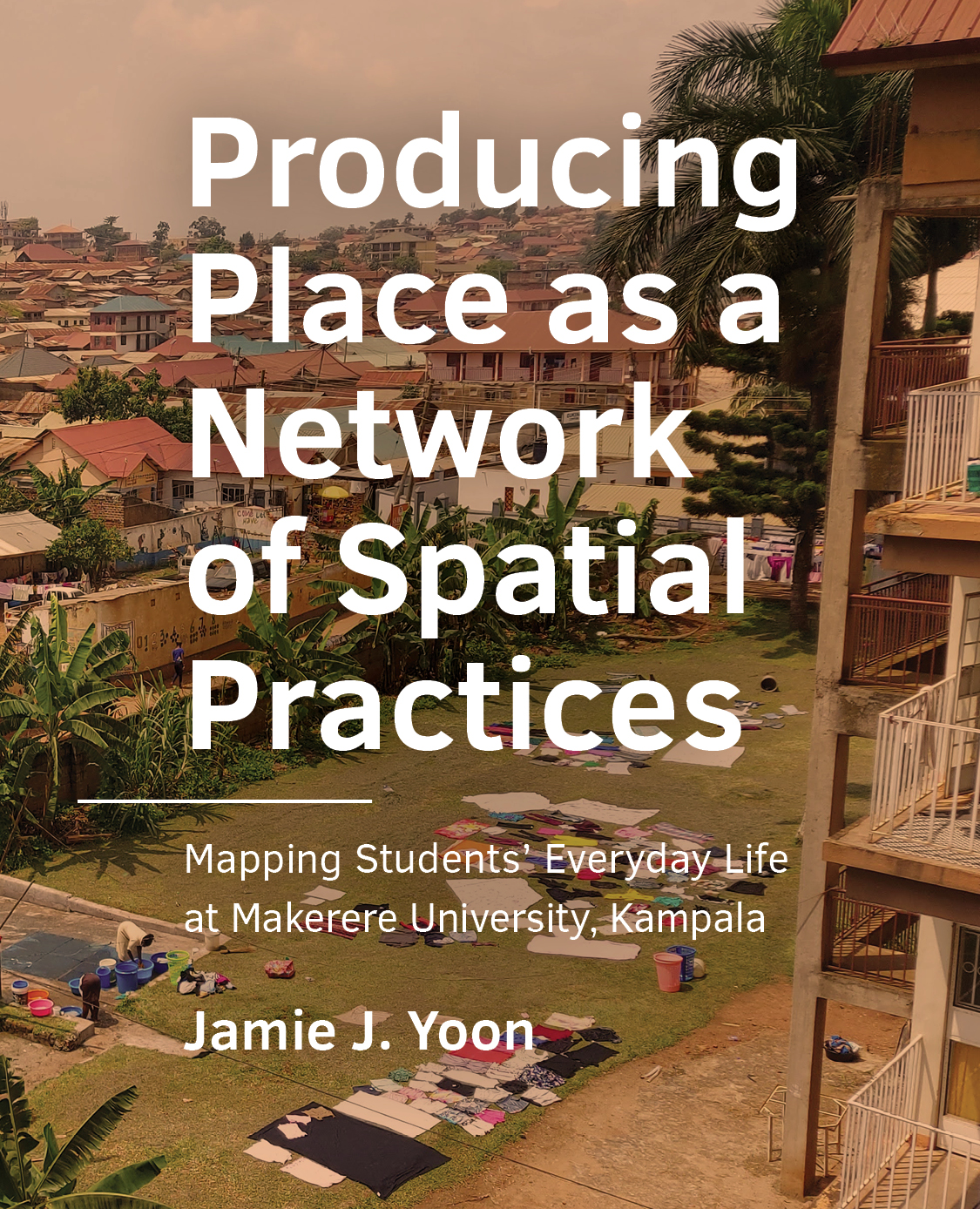
This research examines how places are produced through students' everyday spatial practices at Makerere University in Kampala, Uganda—a rapidly urbanizing city with a booming youth population. Situated at the intersection of colonial-postcolonial history and coexisting formal and informal urban development, Makerere University presents a context that demands approaches beyond Western-centric or structuralist frameworks. Adopting a theoretically driven case study approach, this study employs "campushood" as its primary analytical lens, encompassing both students and the campus environment to enable a holistic, thick description of students' lifeworlds. Through mixed methods, including multi-vocal archival research, place-based interviews, mental mapping, time-budget surveys, and ethnography, this study conducts a multi-layered analysis of spatial practices.
Theoretically, this study proposes a space ontology that understands place as a network of spatial practices, drawing on Theodore Schatzki’s flat ontology and Michel de Certeau’s theory of spatial practices. The proposed urban (ab)normalist framework further supports a contextual and practice-oriented research methodology. Methodologically, the study combines interdisciplinary research methods with ethnomethodology to examine how students navigate and make sense of everyday environments.
The empirical findings reveal three key dimensions: students are active place-producing agents rather than passive consumers of urban space; their practices reflect communal values, blurring boundaries between private and public space; and the emergence of campushood challenges existing studentification discourses by connecting students' lifeworlds across temporal and spatial dimensions. Ultimately, this study contributes to debates on spatial justice by conceptualizing “spatial capital” and foregrounding students’ voices and spatial practices in urban discourses.
References
Abrokwaa, C. (2017). Colonialism and the development of higher education. In Re-thinking Postcolonial Education in Sub-Saharan Africa in the 21st Century (pp. 201-220): Brill Sense.
Ackermann, A., & Visser, G. (2016). Studentification in Bloemfontein, South Africa. Bulletin of Geography, 31(31), 7-17. doi:10.1515/bog-2016-0001
Adama, J. U., Aghimien, D. O., & Fabunmi, C. O. (2018). Students’ housing in private universities in Nigeria: influencing factors and effect on academic performance. International Journal of Built Environment and Sustainability, 5(1).
Ajayi, J. (1996). The African Experience with Higher Education: ERIC.
Akemu, O., & Abdelnour, S. (2020). Confronting the digital: Doing ethnography in modern organizational settings. Organizational research methods, 23(2), 296-321.
Akullu, L. F. (2022, November 24). Makerere female students want TVs in their halls. Daily Monitor. https://www.monitor.co.ug/uganda/news/education/makerere-female-students-want-tvs-in-their-halls
Alexander, C. (1977). A pattern language: towns, buildings, construction. Oxford university press.
Allinson, J. (2006). Over-educated, over-exuberant and over here? The impact of students on cities. Planning, Practice & Research, 21(1), 79-94.
AlSayyad, N. (2004). Urban informality as a “new” way of life. In A. Roy & N. AlSayyad (Eds.), Urban informality: Transnational perspectives from the Middle East, Latin America, and South Asia (pp. 7-29). Lexington Books.
Amole, D. (2009). Residential satisfaction in students’ housing. Journal of Environmental Psychology, 29(1), 76-85.
Amrah, A. Y. (2005). Gender aspects and the housing situation in informal settlements: A case of Kagugube parish in central division, Kampala, Uganda [Bachelor of Urban Planning dissertation, Department of Urban Planning Makerere University].
Anderson, J., & Jones, K. (2009). The difference that place makes to methodology: Uncovering the ‘lived space’of young people’s spatial practices. Children’s Geographies, 7(3), 291-303.
Andorka, R. (1987). Time budgets and their uses. Annual Review of Sociology, 13(1), 149-164.
Asiimwe, D. (2001). The impact of squatter settlement on the environment of urban areas: A case study of Makerere Kivulo, Kampala District [Undergraduate research report, Bachelor of Urban Planning, Department of Geography, Makerere University].
Asiimwe, J. (2002). Courtyard design and use in Makerere University’s residential areas [Undergraduate research report, Bachelor of Architecture, Faculty of Technology Department of Architecture, Makerere University].
Augé, M. (1995). Non-places: Introduction to an anthropology of supermodernity. Verso Books.
Auma, J. (2004). Implications of urban renewal and development to urban communities: A case study of the environs of Makerere University [Undergraduate research proposal, Bachelor of Urban Planning, Faculty of Arts Geography Department, Makerere University].
Balungi, C. Z. (2023, September 25). Kikumi Kikumi - when food around campus was so cheap. Makerere University Endowment Fund. https://endowment.mak.ac.ug/pages/kikumi-kikumi-when-food-around-campus-was-so-cheap/
Balungi, C. Z., & Bazira, I. (2023, December 22). From Northcote to Nsibirwa. Makerere University Endowment Fund. https://endowment.mak.ac.ug/pages/from-northcote-to-nsibirwa/
Barifaijo, M. K., & Ssentamu, P. N. (2017). Intellectual curiosity or deception? an investigation into the practice of teaching outside area of expertise in Uganda. Makerere Journal of Higher Education, 9(1), 3-20.
Basingo, A. (2006). Factors influencing the level of environmental sanitation in urban centers of Uganda: A case study of Makerere II Parish, Kawempe Division, Kampala District [Unpublished bachelor’s thesis. Department of Environmental Management, Makerere University].
Bernstein, B. (2003). Class, codes and control: Towards a theory of educational transmission (Vol. 3). Psychology Press.
Bhan, G. (2019). Notes on a Southern urban practice. Environment and Urbanization, 31(2), 639-654.
Birch, E. (2019, April). Informality as a way of life. In Workshop of the Penn IUR series on urban informality. Institute for Urban Research, University of Pennsylvania (Vol. 24, pp. 1-5).
Bourdieu, P. (1977). Outline of a theory of practice (R. Nice, Trans.). Cambridge University Press.
Bourdieu, P. (1984). Distinction: A social critique of the judgement of taste (R. Nice, Trans.). Harvard University Press. (Original work published 1979)
Bourdieu, P., & Passeron, J. C. (1979). The inheritors: French students and their relation to culture: Univ of Chicago Pr.
Brown, J., Volk, F., & Spratto, E. M. (2019). The hidden structure: The influence of residence hall design on academic outcomes. Journal of Student Affairs Research and Practice, 56(3), 267-283.
Burnet, A. (1982). Higher education in Anglophone tropical Africa (Shelfmark: MSS. Mr. s. 1825 (11), Box III). Oxford, UK: Bodleian Libraries.
Campus Bee. (n.d.). Makerere university students spend more money on accommodation than tuition, study reveals. https://campusbee.ug/news/makerere-university-students-spend-more-money-on-accommodation-than-tuition-study-reveals/
Calvino, I. (1974). Invisible cities (W. Weaver, Trans.). Harcourt Brace & Company. (Original work published 1972)
Carmona, M. (2021). Public places urban spaces: The dimensions of urban design. Routledge.
Chatterton, P. (1998). The university and the community: an exploration of the cultural impacts of universities and students on the community [Doctoral dissertation, University of Bristol].
Chatterton, P. (1999). University students and city centres–the formation of exclusive geographies: The case of Bristol, UK. Geoforum, 30(2), 117-133.
Chille, F. (1996). A study of the survival strategies adopted by urban poor women within the informal sector: A case of Makerere II ward [Bachelor of Arts in Social Sciences dissertation, Department of Sociology, Makerere University].
Corporate prostitution takes over MUBS. (n.d.). CampusBee. https://campusbee.ug/campus-gossip-girl/escort-service-business-takes-over-mubs/
Creswell, J. W., & Creswell, J. D. (2017). Research design: Qualitative, quantitative, and mixed methods approaches: Sage publications.
Cyriaco, M.K. (1999). Expectancy theory approach and the management of workers in halls of residence at Makerere University [Master of Arts dissertation, Department of Educational Management, Makerere University].
de Certeau, M. (1984). The practice of everyday life (S. Rendall, Trans.). University of California Press. (Original work published 1980)
Donaldson, R., Benn, J., Campbell, M., & de Jager, A. (2014). Reshaping urban space through studentification in two South African urban centres. Urbani Izziv, 25, S176.
Elithumu. (2014, December 2). Did German architect Ernst May invent the “Muzigo”? Elithumu [Blog post]. https://elithumu.wordpress.com/2014/12/02/did-german-architect-ernst-may-invent-the-muzigo/
Fedha, N. (2017). Effects of off-campus university students activities on well-being on community Neighbouring Egerton university, Nakuru County, Kenya [Doctoral dissertation, Egerton University].
Fedha, N., Murenga, H., & Bor, E. (2017). Effects of off campus students’ activities on well-being of community neighbouring Egerton University, Nakuru County, Kenya. International Journal of Innovative Research & Development, 6(5), 47-53. https://doi.org/10.24940/ijird/2017/v6/i5/MAY17021
Garfinkel, H. (1967). Studies in Ethnomethodology. Englewood Cliffs, NJ: Prentice Hall.
Garmendia, M., Coronado, J. M., & Ureña, J. M. (2012). University Students Sharing Flats: When Studentification Becomes Vertical. Urban Studies, 49(12), 2651–2668. https://doi.org/10.1177/0042098011428176
Geertz, C. (1973). The interpretation of cultures. Basic Books.
Gieryn, T. F. (2006). City as truth-spot: Laboratories and field-sites in urban studies. Social studies of science, 36(1), 5-38.
Goldthorpe, J. E. (1965). An African Elite. Oxford UP.
Gopal, N., & Van Niekerk, C. (2018). Safety in student residences matters! South African Journal of Higher Education, 32(3), 172-188.
Government of Uganda. (1938, June). The Higher College of East Africa: Proceedings of the Inter-territorial Conference. Government Printer, Uganda. Retrieved from SOAS University of London Archives.
Google. (n.d.). Google Maps [Map]. https://www.google.com/maps
Gregory, J. J., & Rogerson, J. M. (2019a). Housing in multiple occupation and studentification in Johannesburg. Bulletin of Geography. Socio-economic Series, 46(46), 85-102. doi:10.2478/bog-2019-0036
Gregory, J. J., & Rogerson, J. M. (2019b). Studentification and commodification of student lifestyle in Braamfontein, Johannesburg. Urbani Izziv, 30, 178-193. doi:10.5379/urbani-izziv-en-2019-30-supplement-012
Groat, L. N., & Wang, D. (2013). Architectural research methods. John Wiley & Sons.
Gu, H., & Smith, D. P. (2020). ‘Living off the campus’: urban geographies of change and studentification in Beijing, China. Urban Geography, 41(2), 205–224. https://doi.org/10.1080/02723638.2019.1659071
Habermas, J. (1987). The theory of communicative action: Vol. 2. Lifeworld and system: A critique of functionalist reason (T. McCarthy, Trans.). Beacon Press. (Original work published 1981)
Haraway, D. (1988). Situated knowledges: The science question in feminism and the privilege of partial perspective. Feminist Studies, 14(3), 575-599.
Hasan, S., & Fatima, M. (2018). Factors affecting the Academic Performance of university students residing in Student Housing Facility.
Heidegger, M. (1962). Being and time (J. Macquarrie & E. Robinson, Trans.). Harper & Row. (Original work published 1927)
Heidegger, M. (1971). Building dwelling thinking. In A. Hofstadter (Trans.), Poetry, language, thought (pp. 145-161). Harper & Row. (Original work published 1954)
Hein, C. (Ed.) (2018). The Routledge Handbook of Planning History. Routledge - Taylor & Francis Group. https://doi.org/10.4324/9781315718996
Hein, C. M. (2022). (Re)-positioning Spatial Planning History and Historiography. In Teaching, Learning & Researching Spatial Planning (pp. 98-108). TU Delft OPEN Publishing.
Higgs, P. (2012). African philosophy and the decolonisation of education in Africa: Some critical reflections. Educational philosophy and theory, 44, 37-55.
Holstein, J. A., & Gubrium, J. F. (2000). Constructing the life course. Rowman & Littlefield.
Holstein, J. A., & Gubrium, J. F. (2007). Constructionist perspectives on the life course. Sociology Compass, 1(1), 335-352.
Holton, M. (2015). Adapting relationships with place: Investigating the evolving place attachment and ‘sense of place’of UK higher education students during a period of intense transition. Geoforum, 59, 21-29.
Holton, M., & Riley, M. (2014). Talking on the move: place‐based interviewing with undergraduate students. Area, 46(1), 59-65.
Hostel Inspection Committee. (2023). Hostel Inspection Report 2023. Makerere University.
Houle, J., Coulombe, S., Radziszewski, S., Boileau, G., Morin, P., Leloup, X., ... & Robert, S. (2018). Public housing tenants’ perspective on residential environment and positive well-being: An empowerment-based Photovoice study and its implications for social work. Journal of Social Work, 18(6), 703-731.
Hubbard, P. (2008). Regulating the social impacts of studentification: a Loughborough case study. Environment and planning A, 40(2), 323-341.
ICEF Monitor. (2015, March 16). African summit calls for major expansion of higher education. Retrieved. ICEF Monitor. Retrieved from https://monitor.icef.com/2015/03/african-summit-calls-for-major-expansion-of-higher-education/
Iersel, F., & Pols, A. (1959). International student housing : Report of the conference at delft, october 1959. Delft: S.n.
Ijasan, K., & Ahmed, V. (2016). Studentification and the housing needs of international students in Johannesburg: an embedded mixed methods approach. In Research methodology in the built environment (pp. 129-146). Routledge.
ILO (2020). Global Employment Trends for Youth 2020: Africa. ILO. Retrived from https://www.ilo.org/wcmsp5/groups/public/---dgreports/---comm/documents/briefingnote/wcms737670.pdf
Kahangi, G. K. (1991). The effect of non-residence on academic performance of students at Makerere University [Master’s dissertation, Faculty of Education, Makerere University].
Kamagaiga, A. (1999). Problems of non-resident male undergraduate students of Makerere University [Master’s thesis, Makerere University].
Kanakulya, F. (1997). The nature of housing facilities in Kampala district: A case study of Makerere II Parish (Kikoni) [Bachelor’s dissertation, Makerere University].
Kant, I. (1996). Critique of practical reason (M. J. Gregor, Trans.). Cambridge University Press. (Original work published 1788)
Kant, I. (1998). Critique of pure reason (P. Guyer & A. W. Wood, Trans.). Cambridge University Press. (Original work published 1781/1787)
Kant, I. (2000). Critique of the power of judgment (P. Guyer & E. Matthews, Trans.). Cambridge University Press. (Original work published 1790)
Kasozi, A. B. K. (2017). The National Council for Higher Education and the growth of the university sub-sector in Uganda, 2002-2012: CODESRIA.
Kasule, J. C. K. (2000). Private accommodation and academic performance of non-resident students at the Institute of Teacher Education Kyambogo [Master’s thesis in Educational Management, Makerere University].
Katumba, B. (n.d.). My Kafunda! Kikumi-Kikumi, the cheapest eatery around Makerere University. Campus Bee. https://campusbee.ug/lifestyle/my-kafunda-kikumi-kikumi-the-cheapest-eatery-around-makerere-university/
Kaujju, P. (2019, March 18). KCCA gives Kikumikikumi a new face. KCCA. https://www.kcca.go.ug/news/343/kcca-gives-kikumikikumi-a-new-face
Know your hood: Kikoni, where student hostels reign supreme. (2014, Feb 11). Daily Monitor. https://www.monitor.co.ug/uganda/magazines/homes-and-property/know-your-hood-kikoni-where-student-hostels-reign-supreme-1565410
Know your hood: Makerere, a place where real estate is very profitable. (2013, July 23). Daily Monitor. [Updated 2021, January 8]. https://www.monitor.co.ug/uganda/magazines/homes-and-property/know-your-hood-makerere-a-place-where-real-estate-is-very-profitable-1548372
Kokunda, C. (2007). Characterization of slums in physical planning and their development perspective: A case study of Kagugube squatter settlement [Bachelor of Urban Planning dissertation, Department of Urban Planning, Makerere University].
Kuyper, A. (2000). Lectures on Calvinism. Christian Library Press. (Original work published 1898)
Lee, R., & Siddiqi, A. I. (2021). On Diffractions: Feminist Architectural Histories of Migration.
Lehmann, W. (2012). Working-class students, habitus, and the development of student roles: A Canadian case study. British Journal of Sociology of Education, 33(4), 527-546.
Low, S. M., & Altman, I. (1992). Place attachment: A conceptual inquiry. In Place attachment (pp. 1-12). Boston, MA: Springer US.
Lynch, K. (1960). The image of the city. MIT Press.
Lynch, K. (1984). Reconsidering the image of the city. In Cities of the Mind: Images and Themes of the City in the Social Sciences (pp. 151-161). Boston, MA: Springer US.
Macpherson, M. (1964). They built for the Future: Cambrigde University Press.
Magero, J. (1997). Administrative challenges in the halls of residence at Makerere University [Master’s dissertation, Makerere University].
Majola, G. (2026, April 29). The hidden goldmine near campuses: Why your home value is skyrocketing. IOL. https://iol.co.za/business/property/2026-04-29-the-hidden-goldmine-near-campuses-why-your-home-value-is-skyrocketing/
MAK Halls- Residences or Lodges. (n.d.). CampusBee. https://campusbee.ug/news/gossip/mak-halls-the-undying-tunes/
Makerere College. (1960). Report of special committee on halls policy for quinquennium 1956/60 (p. 2). Makerere University Library Archives.
Makerere College. (1960, July). The university college of east Africa - Report of halls policy committee (p. 23) Makerere University Library Archives.
Makerere students fight at porridge night. (n.d.). Campus Bee. https://campusbee.ug/news/gossip/makerere-students-fight-at-porridge-night/
Makerere University. (2010). Makerere University Factbook 2009/2010. Makerere University. https://pdd.mak.ac.ug/docs/fact-books/factsbook200910.pdf
Makerere University. (2013). Makerere University FactBook 2012-2013 (4th ed.). Planning and Development Department.
Makerere University. (2019). Makerere University Factbook 2018/2019. Makerere University https://pdd.mak.ac.ug/wp-content/uploads/2019/10/MAKERERE-UNIVERSITY-PDD-ANNUAL-REPORT-2019.pdf
Makerere University Main Library. (1997). A profile of photographs and rare books at Makerere University Main Library [Exhibition catalog]. Makerere University. Published for National Book Week, November 3-8, 1997 and Makerere University Platinum Jubilee.
Marshall, S. (2012). Science, pseudo-science and urban design. Urban design international, 17(4), 257-271.
Mbabazi, H. (n.d.). Brokeness forces students to sell second hand clothes. Campusbee. https://campusbee.ug/news/gossip/brokeness-forces-students-sell-second-hand-clothes/
Meesters, J. (2009). The meaning of activities in the dwelling and residential environment: a structural approach in people-environment relations (Vol. 27). IOS Press.
Massey, D. (1991). A global sense of place. Marxism Today, 35(6), 24-29.
Massey, D. (1993). Power-geometry and a progressive sense of place. In J. Bird, B. Curtis, T. Putnam, G. Robertson, & L. Tickner (Eds.), Mapping the futures: Local cultures, global change (pp. 59-69). Routledge.
Miller, D. S., & Rivera, J. D. (2006). Town and Gown. International Journal of the Humanities, 3(8).
Mills, D. (2006). Life on the hill: students and the social history of Makerere. Africa, 76(2), 247-266.
Mittelman, J. H. (2018). Decolonizing the postcolonial university? Possibilities and exigencies with evidence from Uganda. Journal of Poverty Alleviation and International Development, 8(1), 1-47.
Mohammed, A. M. S., & Ukai, T. (2022). University campuses as agents for urban change. Environmental and Socio-Economic Studies, 10(1), 22–37. https://doi.org/10.2478/environ-2022-0003
Monteith, W. (2019). Markets and monarchs: indigenous urbanism in postcolonial Kampala. Settler Colonial Studies, 9(2), 247-265.
Mota, N. (2020). Patterns of inhabitation in Addis Ababa. In D. van Gameren & N. Mota (Eds.), Global housing: Dwelling in Addis Ababa. P.91. Jap Sam Books.
Mtani, I. W., & Nuhu, S. (2019). Accommodation Status and Gender Based Analysis at Public Universities in Tanzania: Case of Ardhi University. Open Journal of Social Sciences, 7(04), 24.
Mugaya, M. K. (2024, November 2). Empty plates, empty promises: The plight of university students. Daily Monitor. https://www.monitor.co.ug/uganda/oped/letters/empty-plates-empty-promises-the-plight-of-university-students-4809308
Mulangwa, T. K. (2005). Planning for students’ housing: A case study of Makerere University main campus [Bachelor’s dissertation, Department of Geography, Makerere University].
Munanura, J. (2004). An assessment of characteristics of rental housing among low income group in slum areas of Kampala district [Unpublished bachelor’s thesis, Department of Urban Planning, Makerere University].
Murzyn-Kupisz, M., & Szmytkowska, M. (2015). Studentification in the post-socialist context: The case of Cracow and the Tri-City (Gdansk, Gdynia and Sopot). Geografie, 120(2), 188-209.
Musisi, N. B., & Muwanga, N. K. (2003). Makerere University in transition 1993-2000: Opportunities and challenges.
Musamba, J. D. K. (2000). Student housing: The need and criteria for regulating private hostels for higher institutions of learning in Uganda. (A survey of the private hostels housing Makerere University students). [Unpublished bachelor’s thesis, Department of Architecture, Makerere University].
Mwiine, A. A. (2010). Gender identity construction and reconstruction in students’ accommodation spaces: A case study of student hostels around Makerere University [Unpublished master’s thesis, Department of Gender Studies, Makerere University].
Nagitta, D. (2024, January 30). Why male graduate numbers are decreasing at Makerere. Daily Monitor. https://www.monitor.co.ug/uganda/news/national/why-male-graduate-numbers-are-decreasing-at-makerere-4507846
Nakayiza, C. A. (1996). The influence of aberrant behaviour of undergraduates on inter-hall sports programmes at Makerere University [Master’s dissertation, Faculty of Education, Makerere University].
Nakazawa, T. (2017). Expanding the scope of studentification studies. Geography Compass, 11(1), 1–13. https://doi.org/10.1111/gec3.12300
Namisango, R. (2024, September 21). Nkrumah’s legacy, influence on future generations endures. Makerere University News. https://news.mak.ac.ug/2024/09/nkrumahs-legacy-influence-on-future-generations-endures/
Nawangwe, B. (2011). The Architectural Transformation of Makerere University Neighbourhoods during the Period 1990-2010.
Ndimande, N. P. (2018). Student housing and the slummiƒOcation of the University of Zululand village in KwaDlangezwa, South Africa. Human Geographies, 12(1), 23-40.
NewVision Reporter. (2021, July 10). LOCKDOWN: Kikoni food businesses starve due to MUK closure. NewVision. https://www.newvision.co.ug/category/news/lockdown-kikoni-food-businesses-starve-due-to-NV_108463
Ngwomoya, A. (2013, November 2). How I was lured into prostitution at university. Daily Monitor. https://www.monitor.co.ug/uganda/magazines/full-woman/how-i-was-lured-into-prostitution-at-university-1557194
Niemi, I. (1993). Systematic error in behavioural measurement: Comparing results from interview and time budget studies. Social Indicators Research, 30, 229-244.
Norberg-Schulz, C. (1980). Genius loci. Towards a Phenomenology of Architecture, Rizzoli, New York.
Noronha, J. (2025, March 31). Beyond borders: A life shaped by Makerere, exile and the forces of change. Makerere University Endowment Fund. https://endowment.mak.ac.ug/pages/beyond-borders-a-life-shaped-by-makerere-exile-and-the-forces-of-change/
Nwauwa, A. O. (2013). Imperialism, academe and nationalism: Britain and university education for Africans 1860-1960. Routledge.
Oke, A. E., Aigbavboa, C. O., & Raphiri, M. M. (2017). Students’ satisfaction with hostel accommodations in higher education institutions. Journal of Engineering, Design and Technology.
Okello, H. (n.d.). Kikoni, Banda, Kireka, Kikumi kikumi mzigos to be demolished. Campusbee. https://campusbee.ug/news/gossip/kikoni-banda-kireka-kikumi-kikumi-mzigos-demolished/
Oldenburg, R. (1999). The great good place: Cafes, coffee shops, bookstores, bars, hair salons, and other hangouts at the heart of a community. Da Capo Press.
Omolo-Okalebo, F. (2011). The Evolution of Town Planning Ideas, Plans and their Implementation in Kampala City 1903-2004 [Doctoral dissertation, KTH Royal Institute of Technology].
Omolo-Okalebo, F., Haas, T., Werner, I. B., & Sengendo, H. (2010). Planning of Kampala city 1903—1962: the planning ideas, values, and their physical expression. Journal of planning history, 9(3), 151-169.
Otieno, W. (2004). Privatization of Kenyan Public Universities. International Higher Education (36).
Paay, J., Kjeldskov, J., & Skov, M. B. (2015, February). Connecting in the kitchen: an empirical study of physical interactions while cooking together at home. In Proceedings of the 18th ACM conference on computer supported cooperative work & social computing (pp. 276-287).
Pellow, D. (1992). Spaces that teach: Attachment to the African compound. In Place attachment (pp. 187-210). Boston, MA: Springer US.
Perec, G. (1997). Species of spaces and other pieces (J. Sturrock, Trans.). Penguin. (Original work published 1974)
Plato. (1992). Republic (G. M. A. Grube & C. D. C. Reeve, Trans.). Hackett Publishing. (Original work published ca. 375 B.C.E.)
Pottgiesser, U., & Tostões, A. (2024). Modernism in Africa: The Architecture of Angola, Ghana, Mozambique, Nigeria, Rwanda, South Africa, Sudan, Tanzania, Uganda. De Gruyter.
Prada, J. (2019). Understanding studentification dynamics in low-income neighbourhoods: Students as gentrifiers in Concepción (Chile). Urban Studies, 56(14), 2863–2879. https://doi.org/10.1177/0042098018807623
Prostitute runs with Makerere student’s trouser. (n.d.). CampusBee. https://campusbee.ug/news/gossip/prostitute-runs-makerere-students-trouser/
Relph, E. (1976). Place and placelessness. Pion.Revington, N., Zwick, A., Hartt, M., & Schlosser, J. (2023). Universities and urban social structure: gentrification, studentification, and youthification in five United States legacy cities. Urban Geography, 44(1), 83–104. https://doi.org/10.1080/02723638.2021.1985306
Revington, N., Zwick, A., Hartt, M., & Schlosser, J. (2023). Universities and urban social structure: Gentrification, studentification, and youthification in five United States legacy cities. Urban geography, 44(1), 83-104.
Robinson, J. (2013). Ordinary cities: Between modernity and development. Routledge.
Rocco, R. (2025). A Brief Introduction to Spatial Justice. TU Delft Centre for the Just City. https://doi.org/10.5281/zenodo.17448314
Roy, A. (2016). Who’s afraid of postcolonial theory?. international journal of urban and regional research, 40(1), 200-209.
Rugiireheh-Runaku, J. N. (1995). The humble beginnings of Makerere University: Spot Publications.
Sage, J., Smith, D., & Hubbard, P. (2012). The Rapidity of Studentification and Population Change: There Goes the (Student)hood. Population Space and Place, 18(5), 597-613. doi:10.1002/psp.690
Sawyerr, P. T., & Yusof, N. A. (2013). Student satisfaction with hostel facilities in Nigerian polytechnics. Journal of Facilities Management, 11(4), 306-322.
Schatzki, T. (2016). Practice theory as flat ontology. In Practice theory and research (pp. 44-58). Routledge.
Seamon, D. (2013). Place attachment and phenomenology. Place attachment: Advances in theory, methods and applications, 12-22.
Selfie party: class attracts class at Olympia pool, Kikoni. (n.d.). Campusbee. https://campusbee.ug/proggie/selfie-party-class-attracts-class-at-olympia-pool-kikoni/
Sennett, R. (2018). Building and dwelling: Ethics for the city. Farrar, Straus and Giroux.
Seung, H. (1996). The beauty of poverty. Migeon-sa.
Shearer, A. W. (2016). Abduction to argument: A framework of design thinking. Landscape Journal, 34(2), 127-138.
Shearer, A. W., Kilcullen, D. J., & Pendleton, G. (2021). Conceptualizing a model of antifragility for dense urban areas. Journal of Digital Landscape Architecture, 6, 75-84.
Shocking facts about the Makerere University sextape emerge. (n.d.). Campusbee. https://campusbee.ug/news/gossip/shocking-facts-makerere-university-sextape-emerge/
Sicherman, C. (2005). Becoming an African University: Makerere, 1922-2000: Africa World Pr.
Sicherman, C. (2008). Makerere’s myths, Makerere’s history: a retrospect. Journal of Higher Education in Africa/Revue de l’enseignement supérieur en Afrique, 6(1), 11-39.
Simone, A. (2004). People as infrastructure: Intersecting fragments in Johannesburg. Public culture, 16(3), 407-429.
Simone, A. (2010). City life from Jakarta to Dakar: movements at the crossroads. Routledge.
Simpeh, F., & Shakantu, W. (2019). On-campus university student housing facility services prioritisation framework. Facilities.
Simpson, D. B., & Burnett, D. (2019). Commuters versus residents: The effects of living arrangement and student engagement on academic performance. Journal of College Student Retention: Research, Theory & Practice, 21(3), 286-304.
Smith, D. P. (2002). Patterns and processes of studentification in Leeds. Regional Review, 12(1), 14.
Smith, D. P. (2004). ‘Studentification ication’: the gentrification factory?. In Gentrification in a global context (pp. 73-90). Routledge.
Smith, D. P., Sage, J., & Balsdon, S. (2014). The geographies of studentification: ‘Here, there and everywhere’? Geography, 99, 116–127. https://doi.org/10.1080/00167487.2014.12094405
Smith, P. (2008). Cultural theory: An introduction (Korean trans.). Seoul: Ehaksa. (Original work published 2001)
Soja, E. W. (2010). Seeking spatial justice. U of Minnesota Press.
Spirn, A. W. (2011). The Eye is a Door: Photography and the Art of Visual Thinking: Wolf Tree Press.
Spivak, G. C. (1988). Can the subaltern speak? In C. Nelson & L. Grossberg (Eds.), Marxism and the Interpretation of Culture (pp. 271–313). Macmillan Education.
Stanton, H. (1978). A Picture of Uganda in the 60s. (Shelfmark MSS.Afr.s.2285). Oxford, UK: Bodleian Libraries.
Sumartojo, S., & Stead, N. (2021). Companion Practices: Interpreting Sites of Troubled Histories through Architecture and Ethnography. In D. van den Heuvel, F. Tanis, & S. Ah Hwang (Eds.), The Observers Observed: Architectural Uses of Ethnography (pp. 20-27). DELFT University of Technology.
Sundkvist, H. (2010). Students Housing in Urban Areas of Tanzania: A comparison study of student’s housing in Dar es Salaam and Iringa and its affect’s on student’s performance in higher education.
Szalai, A. (Ed.). (1972). The use of time: Daily activities of urban and suburban populations in twelve countries.
The Economist (2019, August 10). A booming population is putting strain on Africa’s universities. The Economist. Retrieved from https://www.economist.com/middle-east-and-africa/2019/08/10/a-booming-population-is-putting-strain-on-africas-universities
The good, the bad and ugly of campus hostel life. (2013, August 24). Daily Monitor. https://www.monitor.co.ug/uganda/magazines/life/the-good-the-bad-and-ugly-of-campus-hostel-life-1551158
The stories behind Makerere University halls of residence. (2014, Feb 20). Daily Monitor. https://www.monitor.co.ug/uganda/lifestyle/reviews-profiles/the-stories-behind-makerere-university-halls-of-residence-1566130
Trace, C. B. (2016). Ethnomethodology: Foundational insights on the nature and meaning of documents in everyday life. Journal of Documentation, 72(1), 47-64.
Tuan, Y. F. (1975). Images and mental maps. Annals of the Association of American geographers, 65(2), 205-212.
Tuan, Y. F. (1977). Space and place: The perspective of experience. U of Minnesota Press.
Tusiime, G. H. (1999). Correlates to inter-halls student’s relations at Makerere University [Master of Arts dissertation, Department of Educational Management, Makerere University].
Uganda Bureau of Statistics. (2025). Thematic report on the adolescents and youths in Uganda: Based on UDHS 2022. Uganda Bureau of Statistics.
Uganda Parliamentary Forum on Youth Affairs. (2017). The state of the youth report 2016/17: a summary of the report findings. Retrieved from https://www.hiretheyouth.org/wp-content/uploads/2017/12/State-of-the-Youth-Report-2017-Uganda.pdf
UK Parliament. (n.d.). Churchill and the Commons Chamber. Retrieved December 17, 2025, from https://www.parliament.uk/about/living-heritage/building/palace/architecture/palacestructure/churchill/
UNDP. (2017, August 7). Africa’s defining challenge. UNDP. Retrieved from https://www.africa.undp.org/content/rba/en/home/blog/2017/8/7/africa_defining_challenge.html
UNESCO. (2020). Education : Gross enrolment ratio by level of education [data set]. Retrieved from: http://data.uis.unesco.org/?queryid=142
United Nations. (2012). The millennium development goals report 2012. United Nations. https://www.un.org/millenniumgoals/pdf/MDG%20Report%202012.pdf
van Gameren, D. (2018). College versus campus. DASH | Delft Architectural Studies on Housing, 6(10), 18–39. Retrieved from https://journals.open.tudelft.nl/dash/article/view/4893
Van Leeuwen, J. M., Sekeramayi, T., Martell, C., Feinberg, M., & Bowersox-Daly, S. (2017). A baseline analysis of the Katanga slums: informing urban public policy in Kampala, Uganda. African Population Studies, 31(2).
Visser, G., & Kisting, D. (2019). Studentification in Stellenbosch, South Africa. Urbani Izziv, 30, 158-177. doi:10.5379/urbani-izziv-en-2019-30-supplement-011
Walusimbi, P. (2005). Institutions and the changing urban land use and development patterns: A case study of Makerere University and surroundings [Bachelor’s dissertation, Department of Geography, Faculty of Arts, Makerere University].
Wang, C. C., Morrel-Samuels, S., Hutchison, P. M., Bell, L., & Pestronk, R. M. (2004). Flint photovoice: Community building among youths, adults, and policymakers. American journal of public health, 94(6), 911-913.
Wang, C., & Burris, M. A. (1997). Photovoice: Concept, methodology, and use for participatory needs assessment. Health education & behavior, 24(3), 369-387.
Wekikye, A. (2005). The effectiveness of building permits in controlling development; A case study of building plans in Makerere Kikoni, Kawempe Division [Bachelor’s research project, Department of Urban Planning, Makerere University].
Wirth, L. (1938). Urbanism as a Way of Life. American journal of sociology, 44(1), 1-24.
World Bank. (2010). Financing higher education in Africa (54441). Retrieved from http://documents.worldbank.org/curated/en/497251467990390368/pdf/544410PUB0EPI01BOX0349416B01PUBLIC1.pdf
World Bank. (2018). Urban population growth (annual %) - Sub-Saharan Africa [data set]. Retrieved from https://data.worldbank.org/indicator/SP.URB.GROW?locations=ZG
World Bank. (2020). The World Bank In Uganda. Retrieved 2020, March 12 from https://www.worldbank.org/en/country/uganda/overview
World Bank. (2024). Urban population growth (annual %). World Bank Open Data. https://data.worldbank.org/indicator/SP.URB.GROW
World Economic Forum. (2016, May 04). These are Africa’s fastest-growing cities – and they’ll make or break the continent. World Economic Forum. Retrieved from https://www.weforum.org/agenda/2016/05/africa-biggest-cities-fragility/
World Economic Forum. (2018, June 27). African cities will double in population by 2050. Here are 4 ways to make sure they thrive. World Economic Forum. Retrieved from https://www.weforum.org/agenda/2018/06/Africa-urbanization-cities-double-population-2050-4%20ways-thrive/
Yanni, C. (2019). Living on Campus: An Architectural History of the American Dormitory: U of Minnesota Press.


