The Case of Residential Heritage in the Old City of Aleppo
Downloads
Published
Issue
Section

How to Cite
Keywords:
Residential Heritage, Reconstruction, AleppoAbstract
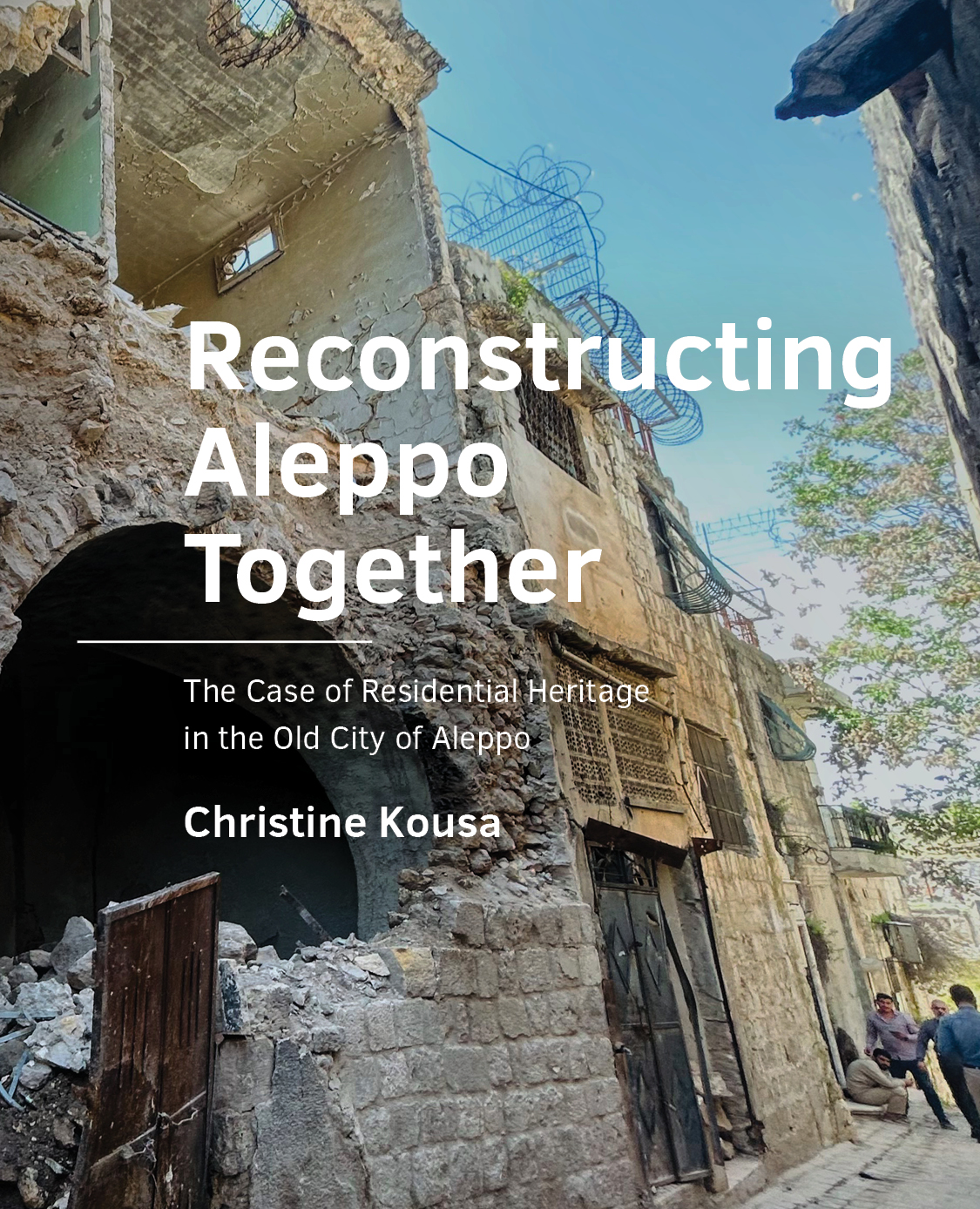
The Syrian war has caused unprecedented destruction to the nation’s architectural heritage, endangering both its tangible fabric and intangible cultural values. Among the most affected areas is the Old City of Aleppo, where traditional courtyard houses, key bearers of cultural identity and social continuity, have suffered extensive damage. While post-Syrian-war reconstruction initiatives in Aleppo have largely focused on monumental buildings, the residential heritage has remained overlooked.
This dissertation addresses this critical gap by developing a participatory, resident-based approach to the conservation and reconstruction of Aleppo’s residential heritage. Drawing upon data collected through on-site surveys, interviews, and questionnaires in three neighbourhoods of the Old City, the study identifies the principal administrative, legal, and socio-economic obstacles hindering sustainable reconstruction. In parallel, an analysis of Syrian policies related to residential heritage and international post-war reconstruction experiences highlights the importance of residents' participation, flexible regulations, and educational initiatives. Building on these findings, this dissertation proposes a co-creation educational programme designed to engage residents, architects, and craftsmen as active stakeholders in the reconstruction process. The programme delineates four phases of co-creation: co-diagnosis, co-design, co-implementation, and co-monitoring, each employing validated teaching and participatory methods adapted to the specific context of Aleppo.
The proposed approach contributes to bridging the existing gap between official reconstruction procedures and the lived realities of post-war communities. Besides, it offers a replicable and adaptable approach that can be refined and applied to a wider range of conservation interventions in other post-war heritage contexts.


