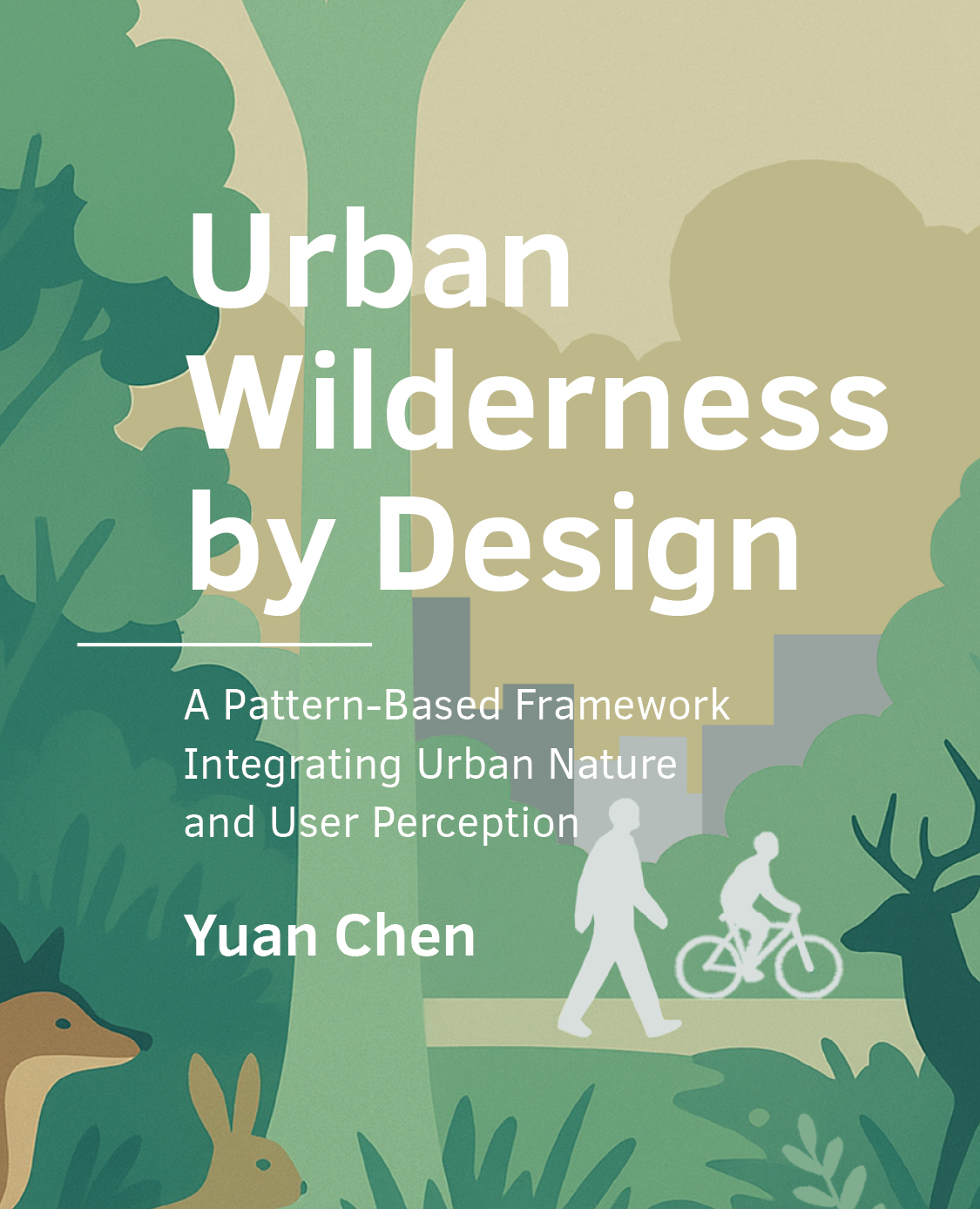
A Pattern-Based Framework Integrating Urban Nature and User Perception
Downloads
Published
Issue
Section

How to Cite
Keywords:
Landscape planning and design, Urban wilderness, Environmental perception, Pattern LanguageAbstract
This thesis examines the practical integration of urban wilderness into spatial planning and design, aiming to establish actionable knowledge through a pattern language that supports ecologically driven and perceptually engaging urban environments. The thesis systematically explores four interconnected aspects: clarifying the conceptual foundations of urban wilderness in the urban planning and design discipline; investigating its spatial features and user perceptions; synthesizing design knowledge into structured wilderness design patterns; and validating their applicability through expert interviews and collaborative design experiments. First, the thesis maps the conceptual terrain of urban wilderness using scientometric and thematic analyses, identifying philosophical, ecological, and urbanistic dimensions while revealing a critical gap in design-oriented approaches. It establishes a methodological basis for translating wilderness ideas into planning and design practice. Subsequently, the thesis employs comparative case studies and mixed-method empirical research, including questionnaires, mental mapping, and behavioral observations, to generate both qualitative and quantitative insights into how urban wilderness is formed in practice and perceived by visitors. Building on these findings, the thesis formulates 24 design patterns that articulate context-sensitive strategies through natural, cultural, and social lenses, providing structured guidance for integrating ecological spontaneity and human intelligibility. Their applicability and usability are subsequently assessed through expert interviews and a collaborative design workshop, yielding reflections that refine the pattern language and indicate future directions. Overall, the thesis provides a cohesive framework for translating the concept of urban wilderness into practical design interventions that enhance ecological resilience and enrich human experience.


